
Both Sprint Nextel and Verizon Wireless operate mobile music stores--you can search, purchase and listen to music right on your phone. Feature wise the stores are pretty similar:
Powered by EV-DO so downloads are fast
Dual-mode downloads so you can have a copy on your computer
Use a compressed audio format that makes files about half the size of MP3s
Use DRM so you can't share music
The video review covers both stores and runs about six minutes long. We purchased a song from each store and show the process in real time. Both a LG VX8100 and Samsung a920 are used in the demo.
Tuesday, January 31, 2006

Cingular offers thin phone with iTunes music player

NEW YORK (Reuters) - Cingular Wireless, the No. 1 U.S. mobile provider, has started offering its customers the Slvr, an ultra-thin phone from Motorola Inc. (NYSE:MOT - news) loaded with the popular iTunes music-playing software from Apple Computer Inc. (Nasdaq:AAPL - news), the companies said on Tuesday.
ADVERTISEMENT
The Slvr takes its cue from Motorola's hit-selling Razr cell phone, and is the company's second take on a device that includes Apple's music software.
Cingular already sells the Rokr, Motorola's first iTunes music phone, which disappointed some fans of Apple's iPod music player and Motorola's flagship Razr phone as it resembled neither.
Music is seen in the wireless industry as one of the hottest new cell phone features as service providers aim to attract new subscribers and boost revenue with services beyond voice.
Motorola, which had said it was disappointed with how the Rokr phone was marketed, plans to focus more on the design than the music player in marketing the candy bar-shaped Slvr.
"The first thing that's going to attract people to this phone is the form factor," said Steve Lalla, Motorola's general manager for mass market products. "We think its going to start with the design and consumers will double-click to look deeper at the features."
Cingular is charging customers who sign up for a two-year contract $199.99 for the phone.
Cingular, which enjoyed a sales boost as the first U.S. provider to sell the Razr at the end of 2004, has a similar agreement to be the only U.S. operator to sell the Slvr for an undisclosed period.
Cingular, unlike its biggest rivals, Sprint Nextel Corp. (NYSE:S - news) and Verizon Wireless, does not yet have a service that offers wireless music downloads. To use the music feature consumers would need to transfer songs from their computer via cable.
But while Cingular has been behind these rivals in the development of high-speed networks for advanced services such as music and video downloads, it has been able on occasion to secure new devices earlier because of the network technology it uses.
The Slvr currently works only on networks based on GSM, the world's most popular cell phone technology standard, which is used by Cingular and European and Asian operators.
Verizon Wireless, which uses CDMA wireless technology, waited about a year before it began selling the Razr.
But Motorola's upcoming Q phone and e-mail device, whose tiny computer-like keyboard makes sending e-mails easier, is expected to be launched on a CDMA network first. GSM users will have to wait.
Analysts expect Verizon Wireless will be first to sell the Q and note that its high-speed network would be more suitable for downloading e-mails than the Cingular network.
Motorola's Lalla said the company plans to expand the Slvr, which is already being sold in several European countries, beyond GSM technology but did not give a time frame.
Cingular is a venture of AT&T Inc. (NYSE:T - news) and BellSouth (NYSE:BLS - news). Verizon Wireless is a joint venture of Verizon Communications (NYSE:VZ - news) and Vodafone Group Plc. (VOD.L).
Monday, January 30, 2006
Nokia, Motorola, Intel Form Alliance for Mobile TV
Today, a group of the industry's leading wireless and entertainment companies announced the formation of new organization created to promote the growth and evolution of Digital Video Broadcasting - Handheld (DVB-H), an open procedure standard for broadcast digital TV reception on mobile devices. The organization, called the Mobile DTV Alliance, includes representatives from Intel Corporation, Modeo, Motorola, Nokia and Texas Instruments (TI).
As mobile video entertainment gains increased awareness and achieves greater availability, the Alliance will focus on promoting the best practices and open standards that deliver premium-quality broadcast television to mobile devices for the North American market.
"The mobile TV market is heating up, with both trials and deployments accelerating over the next 12-18 months," said David Linsalata, Research Analyst for Mobile Markets at IDC. "The support of key industry players in promoting the advantages of the DVB-H standard will significantly aid mobile TV deployment efforts in North America."
An open procedure, industry-supported standard is expected to foster growth throughout the wireless market with more choices across the value chain from silicon, handsets, services and more. This should allow mobile DTV handsets and services to reach the mass market faster and at a lower cost to consumers.
Using mobile devices capable of decoding DVB-H signals, users will be able to receive live TV programming from the mobile TV function directly on their phone and other devices. In addition, users will benefit from on-demand and interactive programming that would utilize the cellular network, thereby increasing revenue opportunities for operators. The DVB-H standard benefits operators by preserving cellular network bandwidth for voice and other data services. Furthermore, mobile broadcast TV together with 2.5G and 3G networks offer an exceptional user experience and more efficient utilization of operators' spectrum and resources.
There are more than 10 DVB-H network trials that have either concluded or are currently underway around the globe, including Australia, Finland, France, Germany, Italy, the United Kingdom, the United States, and other countries. By 2007, most U.S. major markets are expected to have DVB-H infrastructure built out and ready for deployment.
Members of the Alliance will hold a panel session and DVB-H demonstrations at NATPE Mobile++ later today at the Mandalay Bay Hotel, Las Vegas, to discuss the Alliance and the DVB-H standard.
For additional information on the Mobile DTV Alliance, visit: www.mdtvalliance.org
Mobile DTV Alliance Member Comments
"Consumers are demanding more content, such as live TV, from their mobile devices, and open procedure standards are key to delivering that content in a cost-effective way," said Kevin Jones, Director of Business Development for Intel's Mobility Group. "DVB-H is a very effective way to deliver high-quality, broadcast digital TV to mobile users, and Intel is a member of the Mobile DTV Alliance to help promote the standard and availability of this technology."
"Participation in the Mobile DTV Alliance by global leaders such as Intel, Motorola, Nokia and Texas Instruments indicates the significant market potential of DVB-H both in the United States and in other countries. With our unencumbered U.S. spectrum rights and significant broadcast experience, Modeo is well-positioned to deliver a DVB-H broadcast network that will give U.S. consumers a superior mobile television experience delivered through DVB-H-enabled portable devices," commented Michael Schueppert, President of Modeo LLC. Modeo is a subsidiary of Crown Castle International Corp.
"Motorola's extensive experience in video distribution and cellular tells us that Mobile TV is poised to be one of the next great consumer experience drivers," said Rob Bero, Director, Broadcast Technologies, Motorola Mobile Devices. "As a founding member of the Mobile Digital TV Alliance, we're pleased to be working with our fellow industry leaders to bring this experience to market faster and make it more accessible to subscribers everywhere via open standards such as DVB-H."
"Nokia is committed to the deployment of robust, scalable and interoperable DVB-H systems to ensure an exceptional experience with Mobile TV and related value-added services," said Juha Lipiainen, Director of Strategy & Business Development for Mobile TV, Nokia. "To this end, Nokia is pleased to be a part of this joint initiative to bring together technology, product and service leaders to ensure common implementation of DVB-H networks and terminals according to open industry standards."
"The Mobile DTV Alliance provides an open ecosystem for the mobile digital TV marketplace, greatly increasing revenue opportunities, innovation and services to consumers," said Yoram Solomon, Director of Strategic Marketing and Industry Relations for TI's Mobile Connectivity Solutions. "DVB-H is the most widely adopted standard in the world, and having an Alliance with members at every level of the wireless ecosystem, including partners and competitors alike, will ensure widespread adoption of DVB-H in North America."
As mobile video entertainment gains increased awareness and achieves greater availability, the Alliance will focus on promoting the best practices and open standards that deliver premium-quality broadcast television to mobile devices for the North American market.
"The mobile TV market is heating up, with both trials and deployments accelerating over the next 12-18 months," said David Linsalata, Research Analyst for Mobile Markets at IDC. "The support of key industry players in promoting the advantages of the DVB-H standard will significantly aid mobile TV deployment efforts in North America."
An open procedure, industry-supported standard is expected to foster growth throughout the wireless market with more choices across the value chain from silicon, handsets, services and more. This should allow mobile DTV handsets and services to reach the mass market faster and at a lower cost to consumers.
Using mobile devices capable of decoding DVB-H signals, users will be able to receive live TV programming from the mobile TV function directly on their phone and other devices. In addition, users will benefit from on-demand and interactive programming that would utilize the cellular network, thereby increasing revenue opportunities for operators. The DVB-H standard benefits operators by preserving cellular network bandwidth for voice and other data services. Furthermore, mobile broadcast TV together with 2.5G and 3G networks offer an exceptional user experience and more efficient utilization of operators' spectrum and resources.
There are more than 10 DVB-H network trials that have either concluded or are currently underway around the globe, including Australia, Finland, France, Germany, Italy, the United Kingdom, the United States, and other countries. By 2007, most U.S. major markets are expected to have DVB-H infrastructure built out and ready for deployment.
Members of the Alliance will hold a panel session and DVB-H demonstrations at NATPE Mobile++ later today at the Mandalay Bay Hotel, Las Vegas, to discuss the Alliance and the DVB-H standard.
For additional information on the Mobile DTV Alliance, visit: www.mdtvalliance.org
Mobile DTV Alliance Member Comments
"Consumers are demanding more content, such as live TV, from their mobile devices, and open procedure standards are key to delivering that content in a cost-effective way," said Kevin Jones, Director of Business Development for Intel's Mobility Group. "DVB-H is a very effective way to deliver high-quality, broadcast digital TV to mobile users, and Intel is a member of the Mobile DTV Alliance to help promote the standard and availability of this technology."
"Participation in the Mobile DTV Alliance by global leaders such as Intel, Motorola, Nokia and Texas Instruments indicates the significant market potential of DVB-H both in the United States and in other countries. With our unencumbered U.S. spectrum rights and significant broadcast experience, Modeo is well-positioned to deliver a DVB-H broadcast network that will give U.S. consumers a superior mobile television experience delivered through DVB-H-enabled portable devices," commented Michael Schueppert, President of Modeo LLC. Modeo is a subsidiary of Crown Castle International Corp.
"Motorola's extensive experience in video distribution and cellular tells us that Mobile TV is poised to be one of the next great consumer experience drivers," said Rob Bero, Director, Broadcast Technologies, Motorola Mobile Devices. "As a founding member of the Mobile Digital TV Alliance, we're pleased to be working with our fellow industry leaders to bring this experience to market faster and make it more accessible to subscribers everywhere via open standards such as DVB-H."
"Nokia is committed to the deployment of robust, scalable and interoperable DVB-H systems to ensure an exceptional experience with Mobile TV and related value-added services," said Juha Lipiainen, Director of Strategy & Business Development for Mobile TV, Nokia. "To this end, Nokia is pleased to be a part of this joint initiative to bring together technology, product and service leaders to ensure common implementation of DVB-H networks and terminals according to open industry standards."
"The Mobile DTV Alliance provides an open ecosystem for the mobile digital TV marketplace, greatly increasing revenue opportunities, innovation and services to consumers," said Yoram Solomon, Director of Strategic Marketing and Industry Relations for TI's Mobile Connectivity Solutions. "DVB-H is the most widely adopted standard in the world, and having an Alliance with members at every level of the wireless ecosystem, including partners and competitors alike, will ensure widespread adoption of DVB-H in North America."
New Cell Phone Release: Motorola RAZR V3c in Pink
Released By Verizon
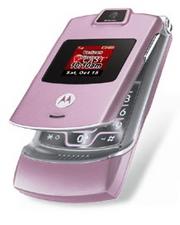
Verizon Wireless last week launched a pink version of the Motorola RAZR V3c. The pink V3c is a lot more mellow than the magenta colored V3 that T-Mobile USA stocks.
Features stay the same as the regular V3c:
1.3 megapixel camera
Bluetooth
EV-DO high-speed data
Speakerphone
The Motorola RARZ V3c in Pink is available now for $249.99 with a 2-year service contract. Motorola is expected to launch the RAZR in more color schemes, but we haven't heard exactly what colors.
Verizon Wireless last week launched a pink version of the Motorola RAZR V3c. The pink V3c is a lot more mellow than the magenta colored V3 that T-Mobile USA stocks.
Features stay the same as the regular V3c:
1.3 megapixel camera
Bluetooth
EV-DO high-speed data
Speakerphone
The Motorola RARZ V3c in Pink is available now for $249.99 with a 2-year service contract. Motorola is expected to launch the RAZR in more color schemes, but we haven't heard exactly what colors.
New Cell Phone Release: Motorola V325
Released By Verizon
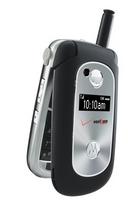
Verizon Wireless today introduced the Motorola V325, a mid-leve clamshell. It's the first handset that is compatible with VZ Navigator, which is a turn-by-turn direction service that was launched in tandem with the V325.
Compatible with new VZ Navigator
30MB built-in memory
Speakerphone
VGA camera
The Motorola V325 is available for $79.99 after $50 mail-in rebate and a two-year service agreement
Verizon Wireless today introduced the Motorola V325, a mid-leve clamshell. It's the first handset that is compatible with VZ Navigator, which is a turn-by-turn direction service that was launched in tandem with the V325.
Compatible with new VZ Navigator
30MB built-in memory
Speakerphone
VGA camera
The Motorola V325 is available for $79.99 after $50 mail-in rebate and a two-year service agreement
Waterloo, ON - Research In Motion ("RIM") (Nasdaq: RIMM; TSX: RIM) provided an update today following a ruling in the Research In Motion UK Limited versus InPro Licensing S.à.r.l. (“InPro”) litigation in the Federal Patent Court (“Nullity Patent Court”) in Munich, Germany. InPro, a patent holding firm based in Luxembourg, had previously asserted a patent in Germany, alleging infringement with respect to certain BlackBerry® products. RIM subsequently filed a nullity action in the Nullity Patent Court seeking a declaration that the InPro patent is invalid. The Nullity Patent Court has now ruled in favor of RIM by deciding that all patent claims in InPro’s German-designated European Patent EP 0892947B1 are invalid. InPro retains the right to appeal the decision to the German Federal Supreme Court.
The BlackBerry and RIM families of related marks, images and symbols are the exclusive properties and trademarks of Research In Motion Limited. RIM, Research In Motion and BlackBerry are registered with the U.S. Patent and Trademark Office and may be pending or registered in other countries. All other brands, product names, company names, trademarks and service marks are the properties of their respective owners.
The BlackBerry and RIM families of related marks, images and symbols are the exclusive properties and trademarks of Research In Motion Limited. RIM, Research In Motion and BlackBerry are registered with the U.S. Patent and Trademark Office and may be pending or registered in other countries. All other brands, product names, company names, trademarks and service marks are the properties of their respective owners.
Verizon Launches Navigator Service
BEDMINSTER, NJ — Beginning today, gas station attendants can breathe a little easier, thanks to a new service that gives wireless customers turn-by-turn directions in the palms of their hands. Verizon Wireless, the nation뭩 premier provider of wireless products and services, announced today the availability of VZ NavigatorTM ?a new tool for customers that gives them access to a wide array of Location Based Services (LBS) options, including mapping, audible turn-by-turn navigation and the ability to find over 14 million points of interest.
Initially available on the new Motorola V325, VZ Navigator is perfect for road warriors who are constantly on-the-go, allowing them to see a map of their current location or an address in the U.S., locate places such as restaurants, gas stations, banks and other points-of-interest relative to their location, plus hear turn-by-turn navigation with audible voice directions to an address in the U.S. VZ Navigator will help Verizon Wireless customers get to where they are going, easily and efficiently.
Location Based Services are enabled by the enhancements Verizon Wireless has made to its award-winning wireless network that allow the company to offer products using Global Positioning System (GPS) data and navigational information. Using GPS and Verizon Wireless?network, VZ Navigator securely communicates valuable location information to customers across the wireless network based on the day of week, time of day and other privacy settings that they establish and manage right from their handsets.
VZ Navigator is initially available on the Motorola V325, a Get It Now®-enabled flip phone, also introduced today, offering Verizon Wireless customers the latest in technology and style. The Motorola V325 features a chic brushed metal and soft touch finish, integrated camera with self portrait and color effects, high resolution color display, 30 megabytes of storage and outstanding call performance. The Motorola V325 is available for $79.99 after a $50 mail-in rebate and a two-year customer agreement.
With VZ Navigator, customers get all the features of an advanced navigation system on their mobile phone at a fraction of the price of other GPS devices and systems. VZ Navigator is available in the getGOING shopping aisle of the Get It Now virtual store beginning today for $9.99 for unlimited monthly access, or $2.99 for 24-hour use. Customers can download the application directly to their Motorola V325.
Download charges for Get It Now applications vary and airtime charges apply when browsing, downloading and using certain applications. Customers need a Get It Now-enabled handset and Verizon Wireless digital service to access the Get It Now virtual store.
Initially available on the new Motorola V325, VZ Navigator is perfect for road warriors who are constantly on-the-go, allowing them to see a map of their current location or an address in the U.S., locate places such as restaurants, gas stations, banks and other points-of-interest relative to their location, plus hear turn-by-turn navigation with audible voice directions to an address in the U.S. VZ Navigator will help Verizon Wireless customers get to where they are going, easily and efficiently.
Location Based Services are enabled by the enhancements Verizon Wireless has made to its award-winning wireless network that allow the company to offer products using Global Positioning System (GPS) data and navigational information. Using GPS and Verizon Wireless?network, VZ Navigator securely communicates valuable location information to customers across the wireless network based on the day of week, time of day and other privacy settings that they establish and manage right from their handsets.
VZ Navigator is initially available on the Motorola V325, a Get It Now®-enabled flip phone, also introduced today, offering Verizon Wireless customers the latest in technology and style. The Motorola V325 features a chic brushed metal and soft touch finish, integrated camera with self portrait and color effects, high resolution color display, 30 megabytes of storage and outstanding call performance. The Motorola V325 is available for $79.99 after a $50 mail-in rebate and a two-year customer agreement.
With VZ Navigator, customers get all the features of an advanced navigation system on their mobile phone at a fraction of the price of other GPS devices and systems. VZ Navigator is available in the getGOING shopping aisle of the Get It Now virtual store beginning today for $9.99 for unlimited monthly access, or $2.99 for 24-hour use. Customers can download the application directly to their Motorola V325.
Download charges for Get It Now applications vary and airtime charges apply when browsing, downloading and using certain applications. Customers need a Get It Now-enabled handset and Verizon Wireless digital service to access the Get It Now virtual store.
Nokia hits targets but forecasts falling handset prices

HELSINKI (AFP) - Nokia, the world's biggest mobile phone manufacturer, has reported net profit for the fourth quarter in line with expectations, but forecast further falls in the selling price of handsets in 2006.
The Finnish company said that net profit in the quarter had slipped by 1.0 percent to 1.073 billion euros, but that earnings per share had risen to 0.25 euros (0.31 dollars) against 0.24 euros a year earlier.
The group also said that the average selling price (ASP) for its mobile phones, which has steadily declined, fell to 99 euros in the fourth quarter, from 102 euros in the third quarter and 111 euros in the fourth quarter of 2004.
Nokia shares, which had traded more than 2.0 percent higher in early Helsinki business on expectations of strong results, dropped immediately after the earnings report.
The results were "weaker than expected", said Petri Arjama, analyst at Handelsbanken.
In early afternoon, Nokia's shares were trading 2.4 percent lower at 14.75 euros on the Helsinki stock exchange.
"ASP at 99 euros was also below the consensus of 100 euros and the company sees first quarter ASP flat to lower," said a dealer at a Scandinavian broker. "The market had been hoping for 100 euros," he added.
Nokia said that the average selling price would fall further in 2006, a development "primarily driven by a mix shift in our volumes to markets where low-end models predominate".
It said that lower selling prices were "consistent with the industry trend, specifically the strong volume growth in emerging markets".
Furthermore, Nokia's global market share increased by a modest single percentage point to 34 percent in the fourth quarter from 33 percent in the third, which dampened expectations by analysts that Nokia could hit the 40-percent mark this year.
Group sales increased by nine percent to 10.33 billion euros overall, and by six percent for the core mobile phone operation alone.
However, sales fell in the networks and enterprise solutions business unit, which builds the infrastructure for mobile phone networks, resulting in a six-percent decline in group operating profit to 1.368 billion euros.
But one broker said he could see light at the end of the tunnel for the networks business after Nokia became slightly more optimistic.
"They raised their ful-year outlook for networks to 'moderate' growth from the earlier forecast of 'slight to modest' growth," he said.
Nokia's chief executive Jorma Ollila said that mobile phone unit sales in 2005 had been driven by gains in China, the Asia-Pacific region as well as Europe.
In China, where Nokia is market leader, the company extended its lead over second-placed Motorola, he said.
Nokia also unveiled plans to buy back 6.5 billion euros worth of its own shares this year.
Share buybacks are used by companies with excess cash and have the effect of boosting dividend payments to shareholders and often result in a rise in the share price.
Nokia raised its dividend to 0.37 euros per share for 2005 from 0.33 in 2004.
Friday, January 27, 2006
Soldius Golf Bag: Solar Charger for Cell Phones

After the CES and MacWorld Expo, it's time for the 2006 PGA Merchandise Show. Soldius from The Netherlands unveiled its latest creation, the Soldius Golf Bag with an integrated solar charger for cell phones and BlackBerries. The first of its kind in the world, this is definitely a sensible addition to your kit.
The bag comes with charging points compatible with more than 250 mobile phones and BlackBerries, including the latest phones from Nokia, Motorola, Sony-Ericsson, Siemens and Samsung. It is available in four models varying in size and price.
This is a neat companion on golfing days, but really, why would anyone want to be disturbed by cell phones when playing golf? The bags will be on display in booth #4708 at the PGA Merchandising Show and Convention, January 26-29, in Orlando. Depending on available sunlight, your device may be fully charged in just three hours.
The pricing has not been announced yet, but the Soldius Golf Bag will be available for purchase soon at Soldius' store.
New Cell Phone Release: Nokia 6280

Nokia's new cell phone, the Nokia 6280, is finally available! The 3G phone comes in a sporty slider design that looks very cool with its contrasting body and keypad colors. With a 2 megapixel camera, this is a highly potent handset from Nokia that does not run a smartphone operating system.
The Nokia 6280 boasts a 262k color screen and tri-band GSM support, with two cameras - one of them can be used for video calls. Available memory is 74MB, and expansion is possible using miniSD memory cards. Connectivity options include Bluetooth, Infrared and thankfully USB 2.0.
Software available on the phone include Xpress audio messaging, instant messaging and e-mail clients. Nokia claims a talk time of 3 hours and standby of 250 hours. Carrying a price tag of €375, Nokia 6280 is now available in Europe.
More details on the phone are available from Nokia.
High-End Mobile Phones Prove Popular
IDC reported this week that high-end devices helped contribute to the shipment of 825 million mobile phones in 2005.
Typically, low- and mid-range phones drive sales, IDC said. But while high-end devices still make up a relatively small proportion of overall shipments, the category reported a big year-over-year leap. More than 55 million converged mobile devices shipped in 2005, a 165 percent increase over 2004. With the increasing availability of third generation networks and their data-access capabilities, phone makers are developing and selling more devices that enable new services, such as music and video downloading, IDC said.
Overall phone shipments grew almost 17 percent over 2004, IDC found.
Developing Markets
With some markets in Europe and other regions becoming increasingly saturated, developing markets like Latin America are now also driving mobile phone growth. Shipments in Latin America rose by almost 34 percent in 2005 compared to the previous year, reaching 105 million phones, according to the report.
The ranking of vendors by market share stayed relatively the same in 2005 but fifth place Sony Ericsson Mobile Communications crept closer to fourth place LG Electronics. In the fourth quarter, LG Electronics shipped 100,000 more phones than Sony Ericsson, compared to 1.6 million more phones in the previous quarter.
Nokia still has the largest market share at 32 percent, selling almost 265 million phones in 2005. Motorola comes next, with almost 18 percent of the market and almost 146 million phones sold in 2005. The top two are followed by Samsung Electronics and then LG Electronics and Sony Ericsson.
Because the fourth quarter 2005 was the second consecutive quarter with more than 200 million phone shipments, IDC expects to see similar continued growth in 2006.
In December, Nokia said that it expects there will be 3 billion mobile subscribers in 2008, bringing closer an earlier prediction of reaching that number by 2010. In September last year, Wireless Intelligence, a research venture between the GSM Association and Ovum, found that more than 2 billion people in the world had cellular connections.
Typically, low- and mid-range phones drive sales, IDC said. But while high-end devices still make up a relatively small proportion of overall shipments, the category reported a big year-over-year leap. More than 55 million converged mobile devices shipped in 2005, a 165 percent increase over 2004. With the increasing availability of third generation networks and their data-access capabilities, phone makers are developing and selling more devices that enable new services, such as music and video downloading, IDC said.
Overall phone shipments grew almost 17 percent over 2004, IDC found.
Developing Markets
With some markets in Europe and other regions becoming increasingly saturated, developing markets like Latin America are now also driving mobile phone growth. Shipments in Latin America rose by almost 34 percent in 2005 compared to the previous year, reaching 105 million phones, according to the report.
The ranking of vendors by market share stayed relatively the same in 2005 but fifth place Sony Ericsson Mobile Communications crept closer to fourth place LG Electronics. In the fourth quarter, LG Electronics shipped 100,000 more phones than Sony Ericsson, compared to 1.6 million more phones in the previous quarter.
Nokia still has the largest market share at 32 percent, selling almost 265 million phones in 2005. Motorola comes next, with almost 18 percent of the market and almost 146 million phones sold in 2005. The top two are followed by Samsung Electronics and then LG Electronics and Sony Ericsson.
Because the fourth quarter 2005 was the second consecutive quarter with more than 200 million phone shipments, IDC expects to see similar continued growth in 2006.
In December, Nokia said that it expects there will be 3 billion mobile subscribers in 2008, bringing closer an earlier prediction of reaching that number by 2010. In September last year, Wireless Intelligence, a research venture between the GSM Association and Ovum, found that more than 2 billion people in the world had cellular connections.
Thursday, January 26, 2006
Motorola and JBL Partner to Offer Mobile Music Accessories
JBL, a leading provider of audio products for the computer industry and a division of Harman International, and Motorola announced an alliance focused on the joint development and marketing of accessories for Motorola's mobile music devices. Motorola and JBL will create innovative accessories for Motorola's music handsets, building upon Motorola's sleek phone design and cutting edge technology and JBL's brand dominance in high-fidelity sound and aesthetic.
According to Strategy Analytics research, music phones are one of the fastest growing mobile device segments, with sales expected to grow to over 400 million by 2008. Music phones appeal to consumer's desires for converged mobile music and wireless communications. Compelling premium accessories combining high-fidelity audio from JBL and Motorola's leadership in mobile devices will create rich mobile music experiences for consumers.
"For JBL to collaborate with Motorola is a promise of extraordinary innovations to take place in the space of consumer electronics, we are quite excited to collaborate with them leveraging our design and technical expertise," said Fred Faulkner, Harman Multimedia's vice president of sales and marketing. "Consumers have indicated their increasing interest in having a total mobile music experience on one device, and accessories are a critical part of that experience. Motorola is a design and technology innovator and we look forward to a fruitful developmental relationship."
"Motorola and JBL are developing products for the consumer who wants to experience mobile communication and entertainment anytime, anywhere - broadcasting live from their pocket or their home," said Joe Hartsig, Senior Director of Product Management, Companion Products Group, Motorola, Inc. "This partnership with Harman's JBL brand allows us to offer our operator and retail customers a complete line of music accessories, including premium Bluetooth stereo headphones and sound systems."
According to Strategy Analytics research, music phones are one of the fastest growing mobile device segments, with sales expected to grow to over 400 million by 2008. Music phones appeal to consumer's desires for converged mobile music and wireless communications. Compelling premium accessories combining high-fidelity audio from JBL and Motorola's leadership in mobile devices will create rich mobile music experiences for consumers.
"For JBL to collaborate with Motorola is a promise of extraordinary innovations to take place in the space of consumer electronics, we are quite excited to collaborate with them leveraging our design and technical expertise," said Fred Faulkner, Harman Multimedia's vice president of sales and marketing. "Consumers have indicated their increasing interest in having a total mobile music experience on one device, and accessories are a critical part of that experience. Motorola is a design and technology innovator and we look forward to a fruitful developmental relationship."
"Motorola and JBL are developing products for the consumer who wants to experience mobile communication and entertainment anytime, anywhere - broadcasting live from their pocket or their home," said Joe Hartsig, Senior Director of Product Management, Companion Products Group, Motorola, Inc. "This partnership with Harman's JBL brand allows us to offer our operator and retail customers a complete line of music accessories, including premium Bluetooth stereo headphones and sound systems."
T-Mobile Ranks Best in Customer Care, Cingular Sprint Worst
Wireless users who have problems or issues with service need to contact their current provider more often than in the past in order to resolve the inquiry, according to the J.D. Power and Associates 2006 Wireless Customer Care Performance Study released today.
The study, in its fourth year, now provides a detailed report card on a semi-annual basis of wireless provider customer care performance based on customer experiences with three point-of-contact methods: telephone with a service representative and / or automated response system (ARS); walk-in at a retail store; and online Internet connection. Within each contact method, processing issues such as problem resolution efficiency and hold-time duration are also measured.
The study finds that wireless customers contact their provider an average of 1.94 times by phone to resolve an issue or problem - the highest level since measurement began in 2000. Since that time, the average problem resolution frequency (PRF) rate has steadily climbed. In 2000, the average PRF rate was 1.36 - a yearly increase of 14 percent. The main factors contributing to this increase in resolution frequency are not only the rise of new wireless services and products that are available, but also the complexity of using those products. Now customers can capture still pictures or video, download ring tones, play MP3 files, and even watch TV clips. This, in turn, puts pressure on the carrier's service representative to understand the issue or problem and try and get the inquiry resolved in a timely manner.
"As more wireless companies encourage customers to try new services, it has become more difficult for the customer service representatives to be fully trained and kept apprised on the latest products being introduced. The downside is the carrier runs the risk of decreasing customer satisfaction and losing customers to other carriers," said Kirk Parsons, senior director of wireless services at J.D. Power and Associates. "Since future switching levels are three times as high among customers who need to re-contact the carrier two or more times to get the inquiry resolved, the challenge for wireless providers is to provide contact channels that can offer an informative and efficient experience for their customers."
For the third consecutive reporting period, T-Mobile ranks highest among the five largest wireless service providers in creating a positive experience for customers who contact their providers for service or assistance. With an index score of 108, T-Mobile performs particularly well across all factors, especially among the contact channels of customer service representatives, ARS and walk-in retail experience. ALLTEL and Verizon Wireless follow T-Mobile in the rankings in a tie, performing significantly above the industry average (104).
Overall Customer Care Index Rankings
Range: 0 (Worst) - 110 (Best)
1. T-Mobile (108)
2. ALLTEL (104)
3. Verizon Wireless (104)
4. Cingular (94)
5. Sprint Nextel (94)
Industry Average (99)
The study also finds several key wireless customer care patterns:
- More than one-half (52%) of wireless users have contacted the customer service department for assistance within the past year, a slight decrease from 2005 (54%).
- Among those who contact their carriers, 71 percent do so via telephone and 25 percent through their carrier's retail stores. E-mail / Internet contacts account for only 4 percent.
- The average initial reported hold time on calls to the customer service department is 3.57 minutes - an increase from 3.44 in 2005. In comparison, it takes, on average, more than 9 minutes before speaking to a representative at a retail store.
- More than four in 10 users (42%) contact their carrier with a service inquiry that is billing related, one-half of which are due to incorrect charges. An additional one-third of all customer care inquiries are call quality related.
The 2006 Wireless Customer Care Performance Study is based on responses from more than 11,490 wireless users who contacted customer care within the past year. The results are from the past two reporting waves, conducted in July and October 2005.
The study, in its fourth year, now provides a detailed report card on a semi-annual basis of wireless provider customer care performance based on customer experiences with three point-of-contact methods: telephone with a service representative and / or automated response system (ARS); walk-in at a retail store; and online Internet connection. Within each contact method, processing issues such as problem resolution efficiency and hold-time duration are also measured.
The study finds that wireless customers contact their provider an average of 1.94 times by phone to resolve an issue or problem - the highest level since measurement began in 2000. Since that time, the average problem resolution frequency (PRF) rate has steadily climbed. In 2000, the average PRF rate was 1.36 - a yearly increase of 14 percent. The main factors contributing to this increase in resolution frequency are not only the rise of new wireless services and products that are available, but also the complexity of using those products. Now customers can capture still pictures or video, download ring tones, play MP3 files, and even watch TV clips. This, in turn, puts pressure on the carrier's service representative to understand the issue or problem and try and get the inquiry resolved in a timely manner.
"As more wireless companies encourage customers to try new services, it has become more difficult for the customer service representatives to be fully trained and kept apprised on the latest products being introduced. The downside is the carrier runs the risk of decreasing customer satisfaction and losing customers to other carriers," said Kirk Parsons, senior director of wireless services at J.D. Power and Associates. "Since future switching levels are three times as high among customers who need to re-contact the carrier two or more times to get the inquiry resolved, the challenge for wireless providers is to provide contact channels that can offer an informative and efficient experience for their customers."
For the third consecutive reporting period, T-Mobile ranks highest among the five largest wireless service providers in creating a positive experience for customers who contact their providers for service or assistance. With an index score of 108, T-Mobile performs particularly well across all factors, especially among the contact channels of customer service representatives, ARS and walk-in retail experience. ALLTEL and Verizon Wireless follow T-Mobile in the rankings in a tie, performing significantly above the industry average (104).
Overall Customer Care Index Rankings
Range: 0 (Worst) - 110 (Best)
1. T-Mobile (108)
2. ALLTEL (104)
3. Verizon Wireless (104)
4. Cingular (94)
5. Sprint Nextel (94)
Industry Average (99)
The study also finds several key wireless customer care patterns:
- More than one-half (52%) of wireless users have contacted the customer service department for assistance within the past year, a slight decrease from 2005 (54%).
- Among those who contact their carriers, 71 percent do so via telephone and 25 percent through their carrier's retail stores. E-mail / Internet contacts account for only 4 percent.
- The average initial reported hold time on calls to the customer service department is 3.57 minutes - an increase from 3.44 in 2005. In comparison, it takes, on average, more than 9 minutes before speaking to a representative at a retail store.
- More than four in 10 users (42%) contact their carrier with a service inquiry that is billing related, one-half of which are due to incorrect charges. An additional one-third of all customer care inquiries are call quality related.
The 2006 Wireless Customer Care Performance Study is based on responses from more than 11,490 wireless users who contacted customer care within the past year. The results are from the past two reporting waves, conducted in July and October 2005.
Pantech Launches Widescreen Phone

Pantech will launch a phone with a 15:9 aspect ratio LCD in Korea this month. The U100 is an EV-DO slider designed to double as a portable media player. Its wide screen more closely matches the format of movies and digital television than traditional 4:3 LCDs. The phone includes a MicroSD slot to store a user's own movies and MP3s, as well as video and music on demand capabilities. It also features a 2 Megapixel autofocus camera.
Samsung today announced a new super-reflective LCD technology for transflective displays. Although the term reflective normally has negative connotations with outdoors viewing, in this case the reflective properties make the display brighter and thus easier to read in bright sunlight. Transflective displays save power over normal TFT LCDs, but often aren't as bright outdoors. The first model to use this new technology is a 128x160 display 3 times brighter than current models. Samsung plans to roll this technology into all its high resolution displays in the future.
Samsung Makes Screens Easier To Read Outdoors

Samsung Electronics announced that it has developed a 1.72-inch super-reflective (SR) LCD screen that can be read easily outdoors even when the sun is shining brightly. The reflectance rate for the new transflective SR LCD technology is three times that of the usual qqVGA-resolution (128x160 pixels) mobile displays available today.
Samsung Electronics has applied silver with high reflectance instead of aluminum to achieve the breakthrough. At the same time, the company developed a new reflective lens that greatly improves the rate at which light is concentrated into pixels. In addition, light entering the 1.72” LCD can be fully harnessed due to improved transmittance capabilities of the polarizer and color filter.
Moreover, to prevent any increase in power consumption, Samsung chose to combine the super-reflectance technology with transflective (illuminated the screen from front and back) rather than transmissive (illuminated from behind the screen) panel technology. The transflective mode makes more effective use of natural outside lighting than the transmissive mode, while the transmissive mode instead would have increased power consumption by requiring a brightness of at least 300nit to sufficiently improve outdoor visibility.
The super-reflective 1.72” LCD has a brightness of 100nit, a contrast ratio of 220:1/30:1 (transmission/reflection) and 50 percent color saturation.
Samsung Electronics plans to apply its new SR technology to all its high-resolution transflective displays in phases.
Mobile phone boom set to continue in 2006: survey

LONDON (Reuters) - Global shipments of mobile phones soared in 2005 and will continue to grow in 2006 on the back of strong demand from emerging economies, which snapped up half of all handsets last year, a survey showed on Thursday.
Mobile phone shipments grew 19 percent to 810 million units in 2005 and are expected to rise by 15 percent to 930 million units in 2006, market research group Strategy Analytics predicted after the top five mobile phone vendors had published quarterly earnings.
"Booming demand in the southern hemisphere, in India and Africa, drove global mobile phone sales," said analyst Neil Mawston.
Sales are set to break through the 1 billion mark in 2007.
Finland's Nokia (NOK1V.HE), which reported earnings earlier on Thursday, kept the lead and ended the year with a 34.2 percent market share in the fourth quarter, up slightly from the 33.6 percent in the year-ago quarter.
The mobile phone behemoth introduced new models at both the low and high end of the market, but the market share gain came at the cost of lower average selling prices and profit margins -- the popularity of phones in emerging markets is a direct result of much cheaper models that cost as little as $40.
Second-largest Motorola (NYSE:MOT - news) closed the gap with Nokia somewhat, taking a larger 18.3 percent market share in the fourth quarter versus 16.2 percent the year before on the back of its thin RAZR phone, which made up one in every three of its phone sales.
The U.S.-based firm was the clear winner with quarterly shipments up 41 percent, while most of the others increased shipments by around 28 percent. But Strategy Analytics warned that the company may be relying too much on the success of the
RAZR.
Samsung Electronics's (005930.KS) market share rose slightly to 11.1 percent from 10.7 percent. Its fellow South Korean handset maker, LG Electronics (066570.KS), was the weakest link in the top five, with quarterly shipments up 17 percent.
The Swedish-Japanese venture Sony Ericsson (6758.T)(ERICb.ST) is breathing down LG's neck due to a comeback based on the Walkman phones it introduced last year.
Both firms now have 6.6 percent global market share, with LG only a whisker ahead of Sony Ericsson.
All top five handset makers now produce more than 50 million handsets a year each.
The really big losers remained the vendors outside the top five. Their combined market share slipped to 23.3 percent in the fourth quarter from 26 percent the year before
Wednesday, January 25, 2006
IBM Speech Research Ties Cell Phones to Web Services
NEW YORK—IBM is seeking to capitalize on its considerable research efforts by disseminating its speech recognition, language translation and speech synthesis software to users and software makers in a variety of industries.
ADVERTISEMENT
Although the company has many research irons in the fire at its Watson Research Center in Yorktown Heights, N.Y., and at other facilities, Big Blue is reaching the breakthrough point in enabling cell phone users to use speech input to interact with Web-based resources, wedding Web services with speech technology.
"We're putting speech technology into existing applications to give customers and cell phone users interaction with the Web," said Mike Nelson, director of on-demand business at IBM.
Click here to read more about IBM's "superhuman" speech technology.
At Wake Forest University, students are using a new cell-phone-based wireless information system that uses IBM technology, nicknamed "Moby Deke," after the school's nickname, the Demon Deacons.
"Ninety-five percent of students use cell phones," said Anne Bishop, director of research and development for information systems at Wake Forest, explaining the reason to focus on cell phones as a user interface. Bishop had implemented a previous system that worked with Pocket PCs, but not all students at the campus gravitated toward the devices. "We found a small group that used it all the time; others never used it. We wanted to combine the Pocket PC and the cell phone."
Now, users at the 6,300-student campus can download to their cell phone their class schedule and can access the library's card catalog from their cell phones upon entering the library. The project also includes a feature that prevents the cell phones from ringing in class.
Another application enables students to check for a shuttle bus's real-time location; another tells students which washing machines at a student laundry are available; yet another lets students listen to their notes played back to them as they walk across the campus.
"If we can capture the attention of 18- to 22-year-olds and focus it on the classroom and student life, then this is a technology that's really worth paying attention to," said Bishop.
IBM officials took the wraps off Embedded ViaVoice 4.4, which boasts what IBM calls "freeform command recognition," or the ability to understand the meaning of spoken words independent of strict word order using contextual algorithms. The company's ViaVoice technology is based on some 300 patents the company holds in speech innovations as well as open standards such as Voice XML.
At a showcase here, IBM demonstrated 12 different applications. In one, a speech recognition system in an automobile dashboard took voice commands to control air conditioning and XM satellite radio dialing. Another system dialed a cell phone using a dashboard-based speech recognition system. IBM has a partnership with Honda to develop this technology and is trying to sell the technology to various automakers as well as to auto suppliers, like Johnson Controls.
While some similar systems are in place in automobiles today, the IBM work implements conversational speech—rather than obeying only specific pre-cast commands—and larger databases of information than current systems, said Igor Jablokov, program director of multimodal speech applications at IBM.
Mike Kennewick, CEO of VoiceBox Technologies, in Kirkland Wash., said his company is using Embedded ViaVoice technology to build conversational voice search applications to deliver digital content to mobile users.
In a partnership with XM satellite radio, VoiceBox has developed a speech-recognition application that will let a driver talk to his or her satellite radio set to switch stations or ask for stock quotes or sports scores, he said.
VoiceBox is also working with Toyota to embed the technology in Toyota vehicles, although the car maker has not said when and in what models it will be available.
Check out eWEEK.com's Mobile & Wireless Center for the latest news, reviews and analysis on mobile and wireless computing.
ADVERTISEMENT
Although the company has many research irons in the fire at its Watson Research Center in Yorktown Heights, N.Y., and at other facilities, Big Blue is reaching the breakthrough point in enabling cell phone users to use speech input to interact with Web-based resources, wedding Web services with speech technology.
"We're putting speech technology into existing applications to give customers and cell phone users interaction with the Web," said Mike Nelson, director of on-demand business at IBM.
Click here to read more about IBM's "superhuman" speech technology.
At Wake Forest University, students are using a new cell-phone-based wireless information system that uses IBM technology, nicknamed "Moby Deke," after the school's nickname, the Demon Deacons.
"Ninety-five percent of students use cell phones," said Anne Bishop, director of research and development for information systems at Wake Forest, explaining the reason to focus on cell phones as a user interface. Bishop had implemented a previous system that worked with Pocket PCs, but not all students at the campus gravitated toward the devices. "We found a small group that used it all the time; others never used it. We wanted to combine the Pocket PC and the cell phone."
Now, users at the 6,300-student campus can download to their cell phone their class schedule and can access the library's card catalog from their cell phones upon entering the library. The project also includes a feature that prevents the cell phones from ringing in class.
Another application enables students to check for a shuttle bus's real-time location; another tells students which washing machines at a student laundry are available; yet another lets students listen to their notes played back to them as they walk across the campus.
"If we can capture the attention of 18- to 22-year-olds and focus it on the classroom and student life, then this is a technology that's really worth paying attention to," said Bishop.
IBM officials took the wraps off Embedded ViaVoice 4.4, which boasts what IBM calls "freeform command recognition," or the ability to understand the meaning of spoken words independent of strict word order using contextual algorithms. The company's ViaVoice technology is based on some 300 patents the company holds in speech innovations as well as open standards such as Voice XML.
At a showcase here, IBM demonstrated 12 different applications. In one, a speech recognition system in an automobile dashboard took voice commands to control air conditioning and XM satellite radio dialing. Another system dialed a cell phone using a dashboard-based speech recognition system. IBM has a partnership with Honda to develop this technology and is trying to sell the technology to various automakers as well as to auto suppliers, like Johnson Controls.
While some similar systems are in place in automobiles today, the IBM work implements conversational speech—rather than obeying only specific pre-cast commands—and larger databases of information than current systems, said Igor Jablokov, program director of multimodal speech applications at IBM.
Mike Kennewick, CEO of VoiceBox Technologies, in Kirkland Wash., said his company is using Embedded ViaVoice technology to build conversational voice search applications to deliver digital content to mobile users.
In a partnership with XM satellite radio, VoiceBox has developed a speech-recognition application that will let a driver talk to his or her satellite radio set to switch stations or ask for stock quotes or sports scores, he said.
VoiceBox is also working with Toyota to embed the technology in Toyota vehicles, although the car maker has not said when and in what models it will be available.
Check out eWEEK.com's Mobile & Wireless Center for the latest news, reviews and analysis on mobile and wireless computing.
Tuesday, January 24, 2006
T-Mobile seeks halt to cell phone record sales

WASHINGTON (Reuters) - T-Mobile, the No. 4 U.S. wireless carrier, said on Monday it asked a Washington state court to prevent companies from allegedly using fraudulent means to obtain and sell T-Mobile customer call records.
German-owned T-Mobile said it asked the court for an injunction against Data Find Solutions, 1st Source Information Specialists and related firms and individuals. T-Mobile said the companies ran or owned Web sites such as www.locatecell.com and www.celltolls.com that offered such services.
A person who answered the telephone at 1st Source, based in Florida, declined to comment and a call to the company's lawyer was not immediately returned. Attempts to locate a representative for Data Find Solutions were unsuccessful.
The lawsuit was filed in King County, Washington Superior Court, under the state's criminal profiteering laws, said T-Mobile, which is owned by Deutsche Telekom AG (DTEGn.DE).
"To further safeguard the privacy of our customers, T-Mobile is taking action to prosecute these online data brokers to the fullest extent permitted by the law," Dave Miller, T-Mobile's senior vice president and general counsel, said in a statement.
U.S. lawmakers, state attorneys general, and the Federal Communications Commission are looking into what laws, if any, were broken by companies that have obtained cell phone records and sold them.
Officials are concerned companies are posing as customers or phone company employees to gain access to call records and then selling them online.
Numerous lawmakers in the U.S. House of Representatives and Senate have unveiled plans for legislation to make it illegal to obtain and sell any phone records under false pretenses.
Senate Majority Leader Bill Frist, a Tennessee Republican, joined the chorus on Monday.
"The practice of fraudulently obtaining a customer's cell phone records and selling them over the Internet is wrong and must be stopped," he said in a statement.
Last week, the Illinois attorney general sued 1st Source, accusing the company of using illegal means to access and sell telephone records. The FCC last week issued a citation against 1st Source for failing to comply fully with a subpoena and threatened to fine the company.
Cingular Wireless, the biggest U.S. carrier, has said it had obtained a temporary restraining order against 1st Source and Data Find Solutions. Cingular is a joint venture of BellSouth Corp. (NYSE:BLS - news) and AT&T Inc. (NYSE:T - news)
The two Web sites both said they would not accept queries regarding Cingular numbers.
Cingular Wireless swings to profit of US$204 million in fourth quarter
ATLANTA (AP) - Cingular Wireless LLC, the largest U.S. cellphone provider, swung to a profit in the fourth quarter on strong subscriber and revenue growth.
The Atlanta-based company said Tuesday it earned $204 million US in the three months ending Dec. 31, compared with a loss of $495 million in the same period a year ago.
Revenue from October through December increased more than 24 per cent to $8.85 billion, compared with $7.12 billion a year ago.
Cingular said it finished 2005 with 54.1 million subscribers. It had a net increase of 1.8 million subscribers in the fourth quarter.
Cingular held on to the No. 1 spot in subscribers. But figures released Tuesday by Verizon Wireless show the No. 2 provider is fast gaining on Cingular.
Verizon Wireless, based in Bedminster, N.J., said it ended 2005 with 51.3 million customers, a 7.5 million customer increase over 2004. Cingular added 5 million customers last year.
For the year, Cingular said it made a profit of $333 million, compared to a profit of $201 million for all of 2004. Twelve-month revenue rose to $34.43 billion, compared to $19.57 billion for 2004.
The year-ago figures for the fourth quarter and full year were skewed somewhat by the fact that the merger of Cingular and AT&T Wireless Inc. was not completed until October 2004.
Average monthly revenue per user declined 1.3 per cent in the fourth quarter to $48.86, compared to $49.51 in the same period a year ago. Monthly churn - the rate at which customers switch to other providers - dropped to 2.1 per cent, compared to 2.6 per cent in the year-ago period.
Operating expenses in the fourth quarter totalled $8.3 billion.
Cingular is a joint venture of Atlanta-based BellSouth Corp. and San Antonio-based AT&T Inc., the renamed SBC Communications Inc. Verizon Wireless is a venture of telecommunications companies Verizon Communications Inc. of New York and Vodafone Group PLC of Britain.
The Atlanta-based company said Tuesday it earned $204 million US in the three months ending Dec. 31, compared with a loss of $495 million in the same period a year ago.
Revenue from October through December increased more than 24 per cent to $8.85 billion, compared with $7.12 billion a year ago.
Cingular said it finished 2005 with 54.1 million subscribers. It had a net increase of 1.8 million subscribers in the fourth quarter.
Cingular held on to the No. 1 spot in subscribers. But figures released Tuesday by Verizon Wireless show the No. 2 provider is fast gaining on Cingular.
Verizon Wireless, based in Bedminster, N.J., said it ended 2005 with 51.3 million customers, a 7.5 million customer increase over 2004. Cingular added 5 million customers last year.
For the year, Cingular said it made a profit of $333 million, compared to a profit of $201 million for all of 2004. Twelve-month revenue rose to $34.43 billion, compared to $19.57 billion for 2004.
The year-ago figures for the fourth quarter and full year were skewed somewhat by the fact that the merger of Cingular and AT&T Wireless Inc. was not completed until October 2004.
Average monthly revenue per user declined 1.3 per cent in the fourth quarter to $48.86, compared to $49.51 in the same period a year ago. Monthly churn - the rate at which customers switch to other providers - dropped to 2.1 per cent, compared to 2.6 per cent in the year-ago period.
Operating expenses in the fourth quarter totalled $8.3 billion.
Cingular is a joint venture of Atlanta-based BellSouth Corp. and San Antonio-based AT&T Inc., the renamed SBC Communications Inc. Verizon Wireless is a venture of telecommunications companies Verizon Communications Inc. of New York and Vodafone Group PLC of Britain.
2006: the year of the must-have phone of the future

CANNES, FRANCE (AFP) - This year is set to be the year when the mobile phone could become the all-in-one, must-have gadget for music fans, music chiefs say.
During 2006 the mobile phone will combine the ability to let them download the latest hits and videos, watch TV, take photos and listen to radio -- while making the odd call in between.
With over 1.5 billion mobile phone subscribers worldwide today, this prospect was music to the ears of the top music industry execs who have come in their droves to this Riviera resort for the influential MIDEM music trade fair that opened Sunday.
The music industry is pinning its hopes on the exploding digital music market, and phones in particular, to help bolster its profits that are being hit by the huge physical and online music piracy that is still rife worldwide.
"Its a new world that could transform the music industry in the coming years," Ralph Simon, who heads up the Americas branch of the Mobile Entertainment Forum (MEF), which represents the global enertainment industry, told a packed mobile music conference here.
Mobile phones are the worlds single biggest electronic consumer item, Simon said, adding that mobile music accounted for a big 40 percent of the 1.1 billion dollar revenues made from digital music last year.
Added to that is news that one in five of all mobile phone users how listen to music on their phones, according to a recent report published by the global record industry association, the IFPI.
From just being a simple handset for making telephone calls, cellphones are evolving quickly into a whole entertainment hub.
Consumers could soon be spoiled for choice. Sony Ericsson was the first out of the starting blocs in Autumn last year when it launched its Walkman series of music phones that finally offered cellphone users an option to the Apples smash hit iPod and the plethora of other portable MP3 music players that have transformed the music scene.
Other multimedia-camera mobiles with added music features are starting to come onto the market including some from Motorola.
But the big daddy of them all could be the new N-series of multimedia music phones recently launched by Nokia, the worlds largest handset maker.
Nokia's top music-playing model in the series, the sleek black N91, can hold up to 3,000 songs, which should cover even the most avid music fans favourite collection when it comes on the market in the next few months.
Nokia top multimedia exec Anssi Vanjoki describes the N91 as "a tiny computer into which weve dropped a phone."
The big difference between the Walkman phone and the new Nokia one is that "ours is a multimedia computer," Vanjoki told AFP in a interview.
The cellphone and music worlds are hoping these latest music phones will help drive the somewhat slow take up of the high-quality third generation (3G) phones, which make it faster to download entertainment content on to the phone. These are just starting to catch in European markets although they are already commonplace in the much more advanced Asian markets. In Japan, 70 percent of all the phones sold in the first nine months of 2005 were 3G ones.
3G phones and their ability to download music and video faster and offer better sound quality could be a shot in the arm to the music industry. Ringtones are by far the biggest money spinner for the music and phone business but phone users are starting to switch to paying more to buy and download master ringtones, which are true excerpts from the original sound recording.
Radio will also become a commonplace feature on cellphones, industry experts said.
But not all phone operators are in favour of the all-in-one device.
France Telecom senior exec Patricia Legrand said her group doesnt believe in forcing consumers to do everything on one device.
The operator, which owns international mobile operator Orange and Internet service provider Wanadoo, recently launched two new services.
One, MusiCast, is a personalised radio service that can be accessed via home computers as well as mobile phones, whilst Live Music allows users to transfer music from their PC to their home hi-fi.
One of the few features left to be added in cell phones is already appearing on the Japanese market, the wallet phone.
Some 10 million Japanese are already subscribers to mobiles that include an in-built credit card feature that allows the phone to become a wallet that can can be used for online purchases, Takeshi Natsuno of Japans NTT DoCoMo told MIDEM participants.
That's one phone that owners will certainly not want to leave behind at home
Monday, January 23, 2006
New Cell Phone Released: Audiovox 8945
Service By Verizon
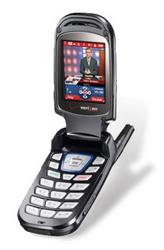
Verizon Wireless today launched the CDM 8945. While it's actually manufactured by UTStarcom, the 8945 is being branded directly by Verizon Wireless. It's the third V Cast Music phone, joining the LG VX8100 and Samsung a950.
Features of the CDM 8945 include:
EV-DO data with V Cast
Speakerphone
microSD card slot
VGA camera
176 x 220 pixel screen with 262K colors
Verizon Wireless is selling the CDM 8945 for $129.99 with a 2-year contract. The music essentials pack which includes software, sync cable and headphones is sold separately for $29.99.
Verizon Wireless today launched the CDM 8945. While it's actually manufactured by UTStarcom, the 8945 is being branded directly by Verizon Wireless. It's the third V Cast Music phone, joining the LG VX8100 and Samsung a950.
Features of the CDM 8945 include:
EV-DO data with V Cast
Speakerphone
microSD card slot
VGA camera
176 x 220 pixel screen with 262K colors
Verizon Wireless is selling the CDM 8945 for $129.99 with a 2-year contract. The music essentials pack which includes software, sync cable and headphones is sold separately for $29.99.
Windows Mobile 5 Coming to T-Mobile Next Month
T-Mobile put a page online this week for subscribers to pre-register for Windows Mobile 5 devices. Next month they will begin offering two of the many Windows Mobile devices offered by their European parent. The MDA is a Pocket PC phone based on the HTC Wizard. It features quad-band GSM/GPRS (EDGE), Wi-Fi, Bluetooth, a 1.3 MP camera and slide out QWERTY keyboard. The SDA offers all the same features in a handset-shaped design - including a QVGA resolution screen. Since it has a traditional keypad, the SDA does not have a slide out keyboard. Cingular launched the 2125 Windows Mobile 5 Smartphone this week. It is similar to the SDA but lacks Wi-Fi and the dedicated music playback buttons.
The US Supreme Court today refused to hear RIM's appeal in the NTP patent case, sending the case back to the district court where the battle has been playing out. RIM had asked the high court to consider whether US patent law applies to Canadian companies, however the court issued no additional orders on this issue when it sent the case back to the district court. RIM's only remaining relief in this case can come from the USPTO, which has already indicated that it will most likely reject all of NTP's remaining patents. However RIM could still be held liable for damages if the district court issues a final judgement before NTP's patents are invalidated.
The US Supreme Court today refused to hear RIM's appeal in the NTP patent case, sending the case back to the district court where the battle has been playing out. RIM had asked the high court to consider whether US patent law applies to Canadian companies, however the court issued no additional orders on this issue when it sent the case back to the district court. RIM's only remaining relief in this case can come from the USPTO, which has already indicated that it will most likely reject all of NTP's remaining patents. However RIM could still be held liable for damages if the district court issues a final judgement before NTP's patents are invalidated.
Cingular Denies Treo Is a Smartphone
Is Palm's Treo device a smartphone? Not according to U.S. wireless carrier Cingular, which says the wireless device is a PDA. But do consumers really care?
In a posting on a ZDNet blog about the launch of a Microsoft Windows Mobile smartphone by Cingular, John Kampfe, director of media and industry analyst relations at Cingular, said that the Treo 700w handheld device is not a smartphone but a handheld. He also said that the Treo 650, which Cingular sells, is not a smartphone.
The just-announced, Cingular-branded 2125 smartphone, made by High Tech Computer Corp., is on sale now for $199. Cingular, a joint venture between AT&T and BellSouth, is targeting the smartphone at both business and consumer customers.
The 2125 runs Microsoft's Windows Mobile 5.0 software and offers Bluetooth connectivity, quad-band international roaming, and high-speed wireless data communications over Cingular's nationwide EDGE network.
Voice-Centric Device
In the ZDnet blog posting, Kampfe said that Cingular does not consider the Treo 700w to be a smartphone, despite the fact that it too runs Windows Mobile 5.0.
He argued that a smartphone has to be a voice-centric device, which the Treo is not. Rival U.S. carrier Verizon Wireless launched the Treo 700w at the Consumer Electronics Show earlier this month. The Treo 700w offers high-speed data communications over Verizon's EVDO network.
Yankee Group analyst John Jackson said that the millions of people using Treo devices do not care whether it is classified as a PDA or as a smartphone.
"What people care about is the functionality offered by a device," Jackson said. Palm, in its promotional material for the Treo, clearly sees the device as a smartphone.
Kampfe declined to comment for this article.
Blurred Distinctions
David Linsalata, an analyst with IDC, said that, from the consumer perspective, the distinctions between the different types of devices -- cellphones, PDAs, and smartphones -- are becoming increasingly blurred.
"You get handheld devices which are basically cellphones, but which also have some of the capabilities of what would traditionally be considered a smartphone," Linsalata said. "Similarly, data-centric devices are getting voice capabilities."
Linsalata said that, while a cellphone might allow a user to do Web browsing or e-mail, these applications would be much easier on a data-centric device with a proper keyboard.
"Ultimately, the question is what kind of experience do consumers get with a cellphone as opposed to a PDA or a smartphone when they want to carry out advanced applications," he said.
In a posting on a ZDNet blog about the launch of a Microsoft Windows Mobile smartphone by Cingular, John Kampfe, director of media and industry analyst relations at Cingular, said that the Treo 700w handheld device is not a smartphone but a handheld. He also said that the Treo 650, which Cingular sells, is not a smartphone.
The just-announced, Cingular-branded 2125 smartphone, made by High Tech Computer Corp., is on sale now for $199. Cingular, a joint venture between AT&T and BellSouth, is targeting the smartphone at both business and consumer customers.
The 2125 runs Microsoft's Windows Mobile 5.0 software and offers Bluetooth connectivity, quad-band international roaming, and high-speed wireless data communications over Cingular's nationwide EDGE network.
Voice-Centric Device
In the ZDnet blog posting, Kampfe said that Cingular does not consider the Treo 700w to be a smartphone, despite the fact that it too runs Windows Mobile 5.0.
He argued that a smartphone has to be a voice-centric device, which the Treo is not. Rival U.S. carrier Verizon Wireless launched the Treo 700w at the Consumer Electronics Show earlier this month. The Treo 700w offers high-speed data communications over Verizon's EVDO network.
Yankee Group analyst John Jackson said that the millions of people using Treo devices do not care whether it is classified as a PDA or as a smartphone.
"What people care about is the functionality offered by a device," Jackson said. Palm, in its promotional material for the Treo, clearly sees the device as a smartphone.
Kampfe declined to comment for this article.
Blurred Distinctions
David Linsalata, an analyst with IDC, said that, from the consumer perspective, the distinctions between the different types of devices -- cellphones, PDAs, and smartphones -- are becoming increasingly blurred.
"You get handheld devices which are basically cellphones, but which also have some of the capabilities of what would traditionally be considered a smartphone," Linsalata said. "Similarly, data-centric devices are getting voice capabilities."
Linsalata said that, while a cellphone might allow a user to do Web browsing or e-mail, these applications would be much easier on a data-centric device with a proper keyboard.
"Ultimately, the question is what kind of experience do consumers get with a cellphone as opposed to a PDA or a smartphone when they want to carry out advanced applications," he said.
U.K. Study: Cell Phones Pose No Risk Of Brain Cancer
A four-year study of brain cancer patients in the U.K. found there is no increased risk of the illness traceable to the use of mobile phones.
The study of 966 brain cancer patients was conducted by London's Institute of Cancer Research and three major British universities. The results were released Friday in a report in the British Medical Journal.
"There was no relationship for risk of glioma (brain cancer) and time since first use of a mobile phone, lifetime years of use and cumulative number of calls and hours of use," the report stated. "Early mobile phones were designed to use analog signals and emitted higher power than current digital phones, but the study showed no increased risk of glioma brain tumors with the use of analog phones."
Several persons in the U.S. have filed litigation against cell phone providers claiming the technology was responsible for causing brain cancer.
The U.K. study sought to counter an earlier Swedish study that claimed there was an increased risk of contracting brain cancer among rural cell phone users. Noting that cancers occurring on the same side of the head as phone use tended to be fully reported, the study said it was likely that over reporting occurred in those cases. "This results in under reporting use on the opposite side of the head," the U.K. researchers said.
The report noted that early mobile phones tended to use stronger analog signals than more recent ones.
The study of 966 brain cancer patients was conducted by London's Institute of Cancer Research and three major British universities. The results were released Friday in a report in the British Medical Journal.
"There was no relationship for risk of glioma (brain cancer) and time since first use of a mobile phone, lifetime years of use and cumulative number of calls and hours of use," the report stated. "Early mobile phones were designed to use analog signals and emitted higher power than current digital phones, but the study showed no increased risk of glioma brain tumors with the use of analog phones."
Several persons in the U.S. have filed litigation against cell phone providers claiming the technology was responsible for causing brain cancer.
The U.K. study sought to counter an earlier Swedish study that claimed there was an increased risk of contracting brain cancer among rural cell phone users. Noting that cancers occurring on the same side of the head as phone use tended to be fully reported, the study said it was likely that over reporting occurred in those cases. "This results in under reporting use on the opposite side of the head," the U.K. researchers said.
The report noted that early mobile phones tended to use stronger analog signals than more recent ones.
Nokia, Motorola, Intel form alliance for mobile TV

HELSINKI (Reuters) - Mobile phone giant Nokia has teamed up with other technology firms to promote the DVB-H technology standard for mobile TV, Nokia said on Monday.
Other firms in the alliance include Intel Corp., Motorola, Texas Instruments and Modeo, owned by Crown Castle International Corp., it said in a statement.
The tie-up, called the Mobile DTV Alliance, aims to encourage open standards for TV broadcasts to mobiles, focusing on the North American market.
DVB-H (Digital Video Broadcasting - Handheld) technology bypasses mobile networks and broadcasts directly to handsets from TV masts, allowing millions of phone users to access the service at the same time.
It also allows them to use interactive services and order "on-demand" programs via mobile networks, which operators hope will be a new source of income.
Mobile operators are keen to exploit the marriage of mobile phones and TV as revenues from voice calls fall because of competition and regulatory cuts to call charges.
The Mobile DTV Alliance said more than 10 DVB-H network trials are under way or have been completed, including in Australia, Finland, France, Germany, Italy, Britain and the United States.
It said most major U.S. markets are expected to have DVB-H infrastructure ready for use by 2007.
DVB-H competes with digital audio broadcast (DAB) technology, which is also under test by operators, as well as wireless firm Qualcomm's MediaFlo technology.
New Trojan Horses Threaten Cell Phones
Three new malicious programs are hitting certain mobile phones, antivirus companies have warned. The Trojan horses, or programs that are disguised as legitimate applications, spread via Bluetooth or multimedia messages and can affect phones running the Symbian operating system.
The infection rate so far from the new malware is low, Symantec reported in threat warnings issued last week.
The Bootton.E Trojan horse was spotted last week by F-Secure and Symantec and is perhaps the most potentially crippling of the three to those infected. The program restarts the mobile device but it also releases corrupted components that cause the reboot to fail, leaving the device unusable.
The Pbstealer.D Trojan sends an infected user's contact list, notepad, and calendar to-do list to other nearby users via Bluetooth. The third Trojan, Sendtool.A, sends malicious programs such as the Pbstealer Trojan to other devices via Bluetooth.
Symantec and F-Secure both admit that these Trojans are unlikely to spread very widely. "They don't spread quickly because they're not purely autonomous," says Ollie Whitehause, a researcher with Symantec. Unlike worms on computers that spread without users knowing, the Trojan horses hitting cell phones spread as attachments that require users to download them.
In the Works?
So far, worms haven't hit mobile phones but it's very likely that people who write viruses are working on them, says Anton Von Trover, marketing manager for F-Secure.
Because current threats are caused by what David Wood, executive vice president of research at Symbian, calls user weakness, antivirus software for mobile devices isn't necessary. "Unlike the case on desktop PCs where you need to have a firewall and antivirus software and you have to keep them up to date, that's not necessary on phones," says Wood.
But with the looming threat of vulnerabilities being found by malicious code writers, enterprises should do a better job preparing for the future, says Rob Bamforth, an analyst with Quocirca. His research shows that enterprises are much more lax about securing mobile handheld devices than laptops.
He advises enterprises to create a policy around securing such devices. Currently, that policy might not include antivirus software because the incidence of viruses seems to be low. "But there will be a problem so they have to take the issue seriously while not necessarily taking every announcement seriously," Bamforth says. He cautions that historically, most reports of viruses on handheld devices have come from antivirus software firms and not end users, an indication that infection rates are probably quite low.
The infection rate so far from the new malware is low, Symantec reported in threat warnings issued last week.
The Bootton.E Trojan horse was spotted last week by F-Secure and Symantec and is perhaps the most potentially crippling of the three to those infected. The program restarts the mobile device but it also releases corrupted components that cause the reboot to fail, leaving the device unusable.
The Pbstealer.D Trojan sends an infected user's contact list, notepad, and calendar to-do list to other nearby users via Bluetooth. The third Trojan, Sendtool.A, sends malicious programs such as the Pbstealer Trojan to other devices via Bluetooth.
Symantec and F-Secure both admit that these Trojans are unlikely to spread very widely. "They don't spread quickly because they're not purely autonomous," says Ollie Whitehause, a researcher with Symantec. Unlike worms on computers that spread without users knowing, the Trojan horses hitting cell phones spread as attachments that require users to download them.
In the Works?
So far, worms haven't hit mobile phones but it's very likely that people who write viruses are working on them, says Anton Von Trover, marketing manager for F-Secure.
Because current threats are caused by what David Wood, executive vice president of research at Symbian, calls user weakness, antivirus software for mobile devices isn't necessary. "Unlike the case on desktop PCs where you need to have a firewall and antivirus software and you have to keep them up to date, that's not necessary on phones," says Wood.
But with the looming threat of vulnerabilities being found by malicious code writers, enterprises should do a better job preparing for the future, says Rob Bamforth, an analyst with Quocirca. His research shows that enterprises are much more lax about securing mobile handheld devices than laptops.
He advises enterprises to create a policy around securing such devices. Currently, that policy might not include antivirus software because the incidence of viruses seems to be low. "But there will be a problem so they have to take the issue seriously while not necessarily taking every announcement seriously," Bamforth says. He cautions that historically, most reports of viruses on handheld devices have come from antivirus software firms and not end users, an indication that infection rates are probably quite low.
Friday, January 20, 2006
Motorola profits nearly double; sales lag estimates slightly
CHICAGO (AP) - Motorola Inc., the world's second-largest maker of cellphones, said Thursday its fourth-quarter income rose 86 per cent as it rode the continuing momentum of its ultra-slim Razr phones to record sales.
The earnings topped Wall Street estimates but revenue and handset shipment totals came in just shy of expectations, sending shares of the Schaumburg, Ill.-based company tumbling in after-hours activity following a four per cent jump during the regular trading session.
Net earnings for the October-through-December quarter were $1.2 billion, or 47 cents per share, up from $647 million US, or 28 cents per share, a year earlier.
Excluding certain items, including a gain from a legal settlement with Turkish network operator Telsim and tax adjustments, earnings were 35 cents per share. That was a penny more than the mean estimate of analysts surveyed by Thomson Financial.
Revenue was $10.43 billion, up 18 per cent from $8.84 billion although slightly below analysts' estimates of $10.51 billion.
Motorola said it shipped 44.7 million handsets during the quarter, an increase of 40 per cent compared with a year earlier and about one per cent below analysts' estimate. It pegged its world market share at 19 per cent, which would keep it a solid but distant second behind Finland's Nokia.
It launched 26 new handsets in the quarter, several of them variations on the Razr that has reinvigorated the once-slumping company since 2004.
The company said it expects first-quarter sales of between $9.3 billion and $9.5 billion and earnings of 27 cents to 29 cents, excluding stock-option expenses of about two cents per share. Both those forecasts are within the range expected by analysts, who had estimated sales of $9.35 billion and per-share earnings of 28 cents.
Motorola shares were trading down $1.62, or 6.7 per cent, in late activity after closing up 74 cents at $24.35 on the New York Stock Exchange before the report was released, reflecting high expectations among investors.
Morningstar Inc. analyst John Slack said Wall Street may have gotten "a little greedy" by expecting a blowout quarter to cap Motorola's stellar year.
"These are great numbers," he said. But compared with lofty expectations, "they delivered but they didn't exceed."
The industry is watching closely to see if Motorola can keep the momentum going with new Razr-related products such as the Slvr and the Pebl.
"Despite not being a blockbuster quarter, they have the hottest product portfolio in the market right now as far as handsets," Slack said.
The earnings topped Wall Street estimates but revenue and handset shipment totals came in just shy of expectations, sending shares of the Schaumburg, Ill.-based company tumbling in after-hours activity following a four per cent jump during the regular trading session.
Net earnings for the October-through-December quarter were $1.2 billion, or 47 cents per share, up from $647 million US, or 28 cents per share, a year earlier.
Excluding certain items, including a gain from a legal settlement with Turkish network operator Telsim and tax adjustments, earnings were 35 cents per share. That was a penny more than the mean estimate of analysts surveyed by Thomson Financial.
Revenue was $10.43 billion, up 18 per cent from $8.84 billion although slightly below analysts' estimates of $10.51 billion.
Motorola said it shipped 44.7 million handsets during the quarter, an increase of 40 per cent compared with a year earlier and about one per cent below analysts' estimate. It pegged its world market share at 19 per cent, which would keep it a solid but distant second behind Finland's Nokia.
It launched 26 new handsets in the quarter, several of them variations on the Razr that has reinvigorated the once-slumping company since 2004.
The company said it expects first-quarter sales of between $9.3 billion and $9.5 billion and earnings of 27 cents to 29 cents, excluding stock-option expenses of about two cents per share. Both those forecasts are within the range expected by analysts, who had estimated sales of $9.35 billion and per-share earnings of 28 cents.
Motorola shares were trading down $1.62, or 6.7 per cent, in late activity after closing up 74 cents at $24.35 on the New York Stock Exchange before the report was released, reflecting high expectations among investors.
Morningstar Inc. analyst John Slack said Wall Street may have gotten "a little greedy" by expecting a blowout quarter to cap Motorola's stellar year.
"These are great numbers," he said. But compared with lofty expectations, "they delivered but they didn't exceed."
The industry is watching closely to see if Motorola can keep the momentum going with new Razr-related products such as the Slvr and the Pebl.
"Despite not being a blockbuster quarter, they have the hottest product portfolio in the market right now as far as handsets," Slack said.
No raised cancer risk from mobile phones: study (Reuters)

LONDON (Reuters) - Using a mobile phone does not increase the risk of developing the most common type of brain tumor, according to a study on Friday.
After a four-year survey, scientists at the Institute of Cancer Research in London and three British universities found no link between regular, long-term use of cell phones and glioma.
"Overall, we found no raised risk of glioma associated with regular mobile phone use and no association with time since first use, lifetime years of use, cumulative hours of use, or number of calls," said Professor Patricia McKinney, of the University of Leeds, in a report in the British Medical Journal.
She added that the results were consistent with the findings of most studies done in the United States and Europe.
Anthony Swerdlow, a co-author of the report, from the Institute of Cancer Research, said the survey is larger than any of the other published studies and part of a collaboration involving 13 countries.
During the past two decades, the use of mobile phones has risen rapidly worldwide but there has been no hard evidence to substantiate fears that the technology causes health problems ranging from headaches to brain tumors.
More than 4,000 new cases of brain tumors in Britain and about 20,000 in the United States are diagnosed each year.
Last year, Swedish scientists said mobile phones could pose a higher health risk to people living in rural areas because they emit more intense signals in the countryside.
But the researchers on Friday said they did not find any increased health threats for rural dwellers.
Earlier mobile phones used analog signals which emitted higher power signals than the later digital models. If there were health dangers from mobiles phones, they would be more likely to result from the earlier models but the scientists found no evidence of it.
They questioned 966 people with glioma brain tumors and 1,716 healthy volunteers about how long they had used mobile phones, the make and model, how many calls they made and how long the calls lasted.
McKinney, Swerdlow and scientists from the universities of Leeds, Manchester and Nottingham said that among cancer sufferers the tumors were likely to be reported on the side of the head used with a mobile phone.
But Swerdlow said it could be due to over-reporting of patients.
"People have a tendency to remember and/or embellish or falsely remember those things that they think might be relevant," he said in an interview.
McKinney said there is a lack of convincing and consistent evidence of any effect of exposure to radiofrequency fields on the risk of cancer.
"Overall, our findings are consistent with this and with most studies on mobile phone use," she added.
Motorola Shares Skid on Revenue Report

CHICAGO - Motorola Inc. shares fell more than 6 percent Friday morning after the world's second biggest cell phone maker reported slightly lower than expected revenue for the fourth quarter.
Motorola is banking on new Razrs to do in 2006 what the first models did last year: reap huge sales gains and reverse the company's image from laggard to leader in handset design.
But Wall Street already is showing it will be disappointed with anything less, and sent its shares lower Friday despite Motorola's report of better-than-expected earnings for the fourth quarter. Revenue rose 18 percent to $10.43 billion, but that was below analysts' estimates of $10.51 billion.
The report was released after the markets closed Thursday.
Motorola shares fell $1.57, or 6.5 percent, to $22.78 in morning trading on the New York Stock Exchange.
The sell-off underscored how far Motorola has come from the days of chronic underperformance, when even nearly doubling its profits is somewhat of a disappointment.
"Razr shipments were strong, as expected," said analyst Matt Hoffman of Moors and Cabot Capital Markets. "It remains a very popular phone in the marketplace." But 11.1 percent margins and other results still disappointed some, he said, because of the changed view concerning Motorola's expected performance.
"Margins certainly didn't beat anybody's expectations. With a high flier like Motorola, people were expecting a lot," he said, calling the results "OK" overall.
Strong sales of the original Razr and 26 new cell phones, including some Razr variations, helped Motorola post an 86 percent profit gain and more are on the way as rivals try to copy the trendy handsets.
New black and pink versions of the Razr are being counted on to extend the success of the brand. In addition, new models such as the Slvr and the Pebl are getting strong early receptions in the market, according to Motorola.
"I think the year of 2005 was the Razr and the year of 2006 is more Razrs," CEO Ed Zander told analysts Thursday when asked how Motorola can maintain its momentum.
The company came in shy of Wall Street expectations with sales of 44.7 million handsets during the fourth quarter.
Morningstar Inc. analyst John Slack said Wall Street might have gotten "a little greedy" by expecting a blowout quarter to cap Motorola's stellar year.
"These are great numbers," he said. But compared with lofty expectations, "they delivered but they didn't exceed."
Net earnings for the October-through-December quarter were $1.2 billion, or 47 cents per share, up from $647 million, or 28 cents per share, a year earlier.
Excluding certain items, including a gain from a legal settlement with Turkish network operator Telsim and tax adjustments, earnings were 35 cents per share. That was a penny more than the mean estimate of analysts surveyed by Thomson Financial.
Motorola pegged its world market share at 19 percent, up 3 percent in a year and 0.5 percent from the third quarter, which would strengthen its second-place position but still leave it far behind Finland's Nokia.
Zander said the company is watching its competitors try to come up with their own versions of the Razr but he likes the early results of the matchup.
"It's nice that competitors are following us," he said. "I'd rather have it that way — I'd rather set the agenda."
Results among Motorola's smaller units were mixed. Its government unit saw operating earnings rise 41 percent on an 8 percent increase in sales to $1.8 billion, the networks segment had an 18 percent drop in earnings on a 4 percent drop in sales to $1.5 billion, and its connected home division had $60 million in earnings on a 1 percent rise in sales.
The company said it expects first-quarter sales of between $9.3 billion and $9.5 billion and earnings of 27 cents to 29 cents, excluding stock-option expenses of about 2 cents per share. Both those forecasts are within the range expected by analysts.
Thursday, January 19, 2006
Motorola Launches 'Miniblue' Miniature Bluetooth Headset

Motorola today is unveiling the Motorola H5 Miniblue Bluetooth Headset, a ground-breaking product that sets a new standard in miniaturization for Bluetooth headset form and function.
Motorola is showcasing Miniblue as part of its rapidly evolving vision of Seamless Mobility at the 2006 International Consumer Electronics Show in Central Hall Booth 8545, where visitors can experience innovations that enable enriched wireless communications, home entertainment, and on-the-go productivity.
Both stylish and innovative, Miniblue is equipped with an in-ear speaker and microphone that picks up your voice through your ear canal. The design greatly reduces ambient noise and enables crystal-clear communications in noisy environments. Weighing only 0.26 ounces and measuring 33 x 41 millimeters in diameter, the H5 Miniblue headset is small enough to ensure a comfortable in-ear fit.
"Miniblue takes Motorola's Bluetooth leadership to the next level and brings the benefits of this technology to consumers in new ways," said Bruce Hawver, vice president and general manager, Companion Products Group, Motorola, Inc. "Miniblue's breakthrough design embodies our passion for delivering wickedly cool and compelling devices and experiences in wireless communications."
Motorola's smallest Bluetooth headset to date, this petite and discreet powerhouse comes equipped with a portable charging base to re-charge on the fly and provide protection when the headset is not in use. The Miniblue with its portable case makes an elegant and stylish solution for seamless communication.
The Motorola H5 Miniblue Bluetooth Wireless Headset is expected to be available in the first half of 2006.
Google and Motorola Join Forces for Mobile Search
Motorola and Google today announced a global alliance to enable users easy access to Google on Motorola handsets.
Motorola will integrate a Google icon onto select devices so that users can connect directly to Google anytime, anywhere at the click of a button. These mass-market, Internet-optimized handsets will be distributed from early 2006 to select Motorola customers worldwide.
"Many of our customers have been asking for mobile devices integrated with their consumers' favorite online search services. By featuring Google on Motorola handsets for those customers, we are making it easier for consumers to connect to the information they need when they need it," said Scott Durchslag, Corporate Vice-President and General Manager of Global xProducts for Motorola's Mobile Device business. "Our relationship with Google provides an opportunity for us to offer a high quality mobile search experience - one familiar to and loved by millions of users across the globe."
"Access to information is imperative for people on-the-go. Whether checking the local weather or locating the restaurant of their choice, consumers today require personalized search services that are tailored to their needs," said Nikesh Arora, vice president, European Operations, Google Inc. "With immediate access to Google, millions of Motorola users worldwide will be able to quickly and easily find information that's important to them."
Motorola handsets with the Google icon are expected to be available to consumers starting in Q1 of 2006.
Motorola will integrate a Google icon onto select devices so that users can connect directly to Google anytime, anywhere at the click of a button. These mass-market, Internet-optimized handsets will be distributed from early 2006 to select Motorola customers worldwide.
"Many of our customers have been asking for mobile devices integrated with their consumers' favorite online search services. By featuring Google on Motorola handsets for those customers, we are making it easier for consumers to connect to the information they need when they need it," said Scott Durchslag, Corporate Vice-President and General Manager of Global xProducts for Motorola's Mobile Device business. "Our relationship with Google provides an opportunity for us to offer a high quality mobile search experience - one familiar to and loved by millions of users across the globe."
"Access to information is imperative for people on-the-go. Whether checking the local weather or locating the restaurant of their choice, consumers today require personalized search services that are tailored to their needs," said Nikesh Arora, vice president, European Operations, Google Inc. "With immediate access to Google, millions of Motorola users worldwide will be able to quickly and easily find information that's important to them."
Motorola handsets with the Google icon are expected to be available to consumers starting in Q1 of 2006.
Sprint Survey Reveals 56% of Phone Users Do More than Talk
Today Sprint announced the results of its U.S. Consumer Wireless Usage Study, a nationwide survey of wireless phone users. The findings show that more than half of wireless phone subscribers (56 percent) rely on their mobile phones for features such as cameras, clocks, calendars, messaging, music and as a substitute flashlight for seeing in dark places.
"The list of features and data applications available on mobile phones continues to grow to meet the needs of consumers on the go," said Jeff Hallock, vice president of product marketing and strategy for Sprint. "Whether it's using location-based services to get driving directions, listening to streaming music or watching live TV, consumers are finding that the mobile phone is the one item they depend on most to stay connected and entertained."
One popular feature might even put an end to the age-old in-car argument over the need to stop and ask for directions. Nearly two-thirds of respondents (63 percent) said they would use their wireless phone to retrieve maps or directions. Cameras remain popular with wireless users, with 55 percent expressing interest in the product. Walkie-talkies and ring tones are also popular with consumers, each cited by 48 percent and Internet access garnered 43 percent interest.
Showing further evidence of the interest in camera phones, 53 percent of camera phone owners take photos with their phone. The overwhelming majority of these "phone-tographers" (96 percent) use their camera phones for spontaneous pictures; nearly one-third take pictures at family gatherings (32 percent) or of their pets (30 percent), while more than one-quarter (27 percent) snap shots at celebrations or on vacation. Respondents also use their camera phone while shopping (18 percent), at concerts (15 percent) and for business purposes (15 percent).
"Images captured on camera phones are not simply stored on the phone," Hallock said. "The majority of Sprint Picture Mail subscribers are active users of the service because they enjoy the ease and convenience of instantly taking, sharing, preserving, managing, editing, and printing digital images that are accessible from their phone and personal computer."
One-third of respondents (33 percent) said they want to play games on their phones. Those who currently do play games on their phones shared some interesting insight into their gaming habits. Fifty-seven percent claim to have played games in the doctor's office, 52 percent while commuting on the bus, train or subway, 37 percent while at the airport and nearly one-third of gamers (32 percent) admit to using the bathroom as a game room.
"Sprint continues to see a strong interest in mobile games from both casual gamers and active gamers - and some are complete fanatics about it," Hallock said. "For example, one customer has played Bejeweled Multiplayer by Jamdat more than 40,000 times - that's almost 2,000 hours of game play!"
The survey showed that the backlight on phones is a useful tool in a variety of settings. Nearly two-thirds of respondents (60 percent) have used the backlight to look for something in the dark, 43 percent to locate a keyhole, 34 percent to guide their way through the dark and 20 percent to read. Additionally, 6 percent have used their backlight to replace a cigarette lighter held over the head at a concert, 4 percent have used it to signal in code and 1 percent have used it to light their face while telling a ghost story.
Consumers are still flipping for flip phones, the phone style preferred by 70 percent of respondents. The next most popular was a "candy bar" style phone, savored by 18 percent. A rugged phone, business device and slider phone were each the style of choice for 4 percent.
With each new model, the wireless phone seems to increasingly resemble a gadget found in a James Bond movie. This survey identified some "out of the box" product additions that may not turn users into spies, but could turn the mobile phone into an even more unusual multi-purpose marvel. With more than one-quarter support, 27 percent of respondents want a printer/scanner/fax incorporated into their phone. A thermometer was the next most popular, garnering 17 percent support, followed by a money/business cardholder and a credit card, each receiving 15 percent support.
When asked what more mainstream features and functions wireless phone users might be interested in adding to their phone, still image cameras still topped the list (29 percent), followed by music players (22 percent) and video cameras (18 percent). A healthy portion of respondents expressed interest in instant messaging (15 percent), and games and TV/video clips both earned 8 percent of the vote.
"With the launch of the high-speed Sprint Power Vision Network, and the availability of robust, easy-to-use applications such as the Sprint Music Store, Sprint TV and Sprint Picture Mail, we expect the adoption rates of these and other entertainment-focused applications to grow and help customers truly realize the power of the "third screen" in their everyday lives," said Hallock.
"The list of features and data applications available on mobile phones continues to grow to meet the needs of consumers on the go," said Jeff Hallock, vice president of product marketing and strategy for Sprint. "Whether it's using location-based services to get driving directions, listening to streaming music or watching live TV, consumers are finding that the mobile phone is the one item they depend on most to stay connected and entertained."
One popular feature might even put an end to the age-old in-car argument over the need to stop and ask for directions. Nearly two-thirds of respondents (63 percent) said they would use their wireless phone to retrieve maps or directions. Cameras remain popular with wireless users, with 55 percent expressing interest in the product. Walkie-talkies and ring tones are also popular with consumers, each cited by 48 percent and Internet access garnered 43 percent interest.
Showing further evidence of the interest in camera phones, 53 percent of camera phone owners take photos with their phone. The overwhelming majority of these "phone-tographers" (96 percent) use their camera phones for spontaneous pictures; nearly one-third take pictures at family gatherings (32 percent) or of their pets (30 percent), while more than one-quarter (27 percent) snap shots at celebrations or on vacation. Respondents also use their camera phone while shopping (18 percent), at concerts (15 percent) and for business purposes (15 percent).
"Images captured on camera phones are not simply stored on the phone," Hallock said. "The majority of Sprint Picture Mail subscribers are active users of the service because they enjoy the ease and convenience of instantly taking, sharing, preserving, managing, editing, and printing digital images that are accessible from their phone and personal computer."
One-third of respondents (33 percent) said they want to play games on their phones. Those who currently do play games on their phones shared some interesting insight into their gaming habits. Fifty-seven percent claim to have played games in the doctor's office, 52 percent while commuting on the bus, train or subway, 37 percent while at the airport and nearly one-third of gamers (32 percent) admit to using the bathroom as a game room.
"Sprint continues to see a strong interest in mobile games from both casual gamers and active gamers - and some are complete fanatics about it," Hallock said. "For example, one customer has played Bejeweled Multiplayer by Jamdat more than 40,000 times - that's almost 2,000 hours of game play!"
The survey showed that the backlight on phones is a useful tool in a variety of settings. Nearly two-thirds of respondents (60 percent) have used the backlight to look for something in the dark, 43 percent to locate a keyhole, 34 percent to guide their way through the dark and 20 percent to read. Additionally, 6 percent have used their backlight to replace a cigarette lighter held over the head at a concert, 4 percent have used it to signal in code and 1 percent have used it to light their face while telling a ghost story.
Consumers are still flipping for flip phones, the phone style preferred by 70 percent of respondents. The next most popular was a "candy bar" style phone, savored by 18 percent. A rugged phone, business device and slider phone were each the style of choice for 4 percent.
With each new model, the wireless phone seems to increasingly resemble a gadget found in a James Bond movie. This survey identified some "out of the box" product additions that may not turn users into spies, but could turn the mobile phone into an even more unusual multi-purpose marvel. With more than one-quarter support, 27 percent of respondents want a printer/scanner/fax incorporated into their phone. A thermometer was the next most popular, garnering 17 percent support, followed by a money/business cardholder and a credit card, each receiving 15 percent support.
When asked what more mainstream features and functions wireless phone users might be interested in adding to their phone, still image cameras still topped the list (29 percent), followed by music players (22 percent) and video cameras (18 percent). A healthy portion of respondents expressed interest in instant messaging (15 percent), and games and TV/video clips both earned 8 percent of the vote.
"With the launch of the high-speed Sprint Power Vision Network, and the availability of robust, easy-to-use applications such as the Sprint Music Store, Sprint TV and Sprint Picture Mail, we expect the adoption rates of these and other entertainment-focused applications to grow and help customers truly realize the power of the "third screen" in their everyday lives," said Hallock.
Sprint Nextel invests $10 million in IPWireless
RESTON, Va.-Sprint Nextel Corp. said it invested another $10 million into IPWireless Inc., which develops UMTS TD-CDMA network technology. Sprint Nextel initially invested $4 million in IPWireless in July.
Sprint Nextel is currently trialing IPWireless' UMTS TD-CDMA technology in Washington, D.C. using its 2.5 GHz spectrum holdings. The technology supports broadband Internet access on laptops, desktops and handheld devices, as well as interactive multimedia services such as video streaming, online gaming, document collaboration and video conferencing.
"Sprint Nextel is committed to evaluating and supporting the best next generation technologies available to deliver cutting-edge services for our customers," said Barry West, chief technology officer at Sprint Nextel. "We believe that UMTS TD-CDMA technology holds great promise as a next generation platform for operators globally, especially for both mobile broadband and mobile TV applications, and we are pleased to make this additional investment."
IPWireless has raised more than $200 million since its founding in 1999.
In other IPWireless news, the company announced the launch of TDtv, a mobile TV solution that the company said can deliver media broadcasts in operators' existing third-generation spectrum. The company said Sprint Nextel will run a trial of TDtv in the United States, while several operators in Europe should announce TDtv trials in their 1900 MHz 3G spectrum. IPMobile also plans to trial TDtv in Japan using the 2010 MHz spectrum it recently acquired.
IPWireless said TDtv combines its UMTS TD-CDMA technology with the Third Generation Partnership Project's multimedia broadcast and multicast standard technology. IPWireless said TDtv will be available in other frequency bands, including the 2.5 GHz band.
"It would be a terrible irony if the next big opportunity in mobile services didn't leverage 3G or put the mobile operators in control of the service offering," said Chris Gilbert, chief executive officer of IPWireless. "We have received a tremendous reaction to TDtv from operators because they see the opportunity to deliver a fantastic mobile media service experience to customers and show regulators and investors that they are using and getting a return on their 3G spectrum."
Sprint Nextel is currently trialing IPWireless' UMTS TD-CDMA technology in Washington, D.C. using its 2.5 GHz spectrum holdings. The technology supports broadband Internet access on laptops, desktops and handheld devices, as well as interactive multimedia services such as video streaming, online gaming, document collaboration and video conferencing.
"Sprint Nextel is committed to evaluating and supporting the best next generation technologies available to deliver cutting-edge services for our customers," said Barry West, chief technology officer at Sprint Nextel. "We believe that UMTS TD-CDMA technology holds great promise as a next generation platform for operators globally, especially for both mobile broadband and mobile TV applications, and we are pleased to make this additional investment."
IPWireless has raised more than $200 million since its founding in 1999.
In other IPWireless news, the company announced the launch of TDtv, a mobile TV solution that the company said can deliver media broadcasts in operators' existing third-generation spectrum. The company said Sprint Nextel will run a trial of TDtv in the United States, while several operators in Europe should announce TDtv trials in their 1900 MHz 3G spectrum. IPMobile also plans to trial TDtv in Japan using the 2010 MHz spectrum it recently acquired.
IPWireless said TDtv combines its UMTS TD-CDMA technology with the Third Generation Partnership Project's multimedia broadcast and multicast standard technology. IPWireless said TDtv will be available in other frequency bands, including the 2.5 GHz band.
"It would be a terrible irony if the next big opportunity in mobile services didn't leverage 3G or put the mobile operators in control of the service offering," said Chris Gilbert, chief executive officer of IPWireless. "We have received a tremendous reaction to TDtv from operators because they see the opportunity to deliver a fantastic mobile media service experience to customers and show regulators and investors that they are using and getting a return on their 3G spectrum."
Cingular Intros Quad-Band Smartphone

Cingular today introduced a new company-branded smartphone, the Cingular 2125. The handset represents the company's first offering powered by Windows Mobile 5.0.
Built by HTC, a Taiwanese wireless device manufacturer, the Cingular 2125 supports quad-band international roaming and the new high-speed EDGE networks.
The new handset is powered by Windows Mobile, which means it can interface with Microsoft Office applications and Microsoft Exchange. It also can interface with Cingular Xpress Mail and MSN Hotmail.
In addition to e-mail, the Cingular 2125 offers access to several wireless messaging applications, including MSN Messenger and Cingular's own multimedia-messaging service.
The 2125 also includes a multimedia suite, with Windows Media Player 10 Mobile at its heart. The device supports multiple audio formats -- including MP3, AMR, AAC, WAV, and WMA -- as well as MPEG-4 video streaming.
As a GSM quad-band "world phone," the 2125 gives you the ability to use the services of carriers in several countries around the world.
Size-wise, the 2125 measures 4.57 x 1.81 x .69 inches and weighs 3.74 ounces, including the battery pack. It is powered by the Texas Instruments OMAP 850 200-MHz processor with 64 MB of built-in SDRAM and 64 MB of Flash ROM.
The device sports a 2.2-inch color screen and comes with Bluetooth 1.2, infrared, and mini-USB connectivity. A 1,150 mAh lithium-ion battery provides up to four hours of talk time and up to six days in the standby mode.
The new EDGE-enabled Cingular 2125 smartphone is available in most Cingular Wireless retail stores now and costs $199 with a two-year contract.
Connecticut probing sale of cell phone records
WASHINGTON (Reuters) - Connecticut is investigating companies that may have illegally sold consumers' cell phone records, state Attorney General Richard Blumenthal said on Wednesday.
"My office has an aggressive, ongoing investigation and will take any action appropriate to pursue any company illegally obtaining and profiting from personal cell phone records," Blumenthal said.
The investigation began in recent months after his office received a handful of complaints.
The Federal Communications Commission said last week it had launched an investigation into how companies obtained the phone records that are available for purchase on the Internet.
In Washington, a bipartisan group of senators introduced legislation on Wednesday that would make it a crime to steal and sell records for cell phones, traditional landlines and Internet-based telephones.
The bill would criminalize the act of making false statements to obtain a customer's phone record or access records on the Internet without permission. It would also become a crime for a phone company employee to sell customer data without permission.
"Stealing a person's phone log can lead to serious personal, financial and safety issues for just about any American," said Sen. Charles Schumer (news, bio, voting record), a New York Democrat.
Also sponsoring the bill was Senate Judiciary Chairman Arlen Specter, a Pennsylvania Republican, and Sen. Bill Nelson (news, bio, voting record), a Florida Democrat. The bill would likely have to go through Specter's committee as well as the Senate Commerce Committee.
Senate Commerce Committee Chairman Ted Stevens said in a statement that the panel will review possible legislative options and "will hold a public hearing in the near future to investigate how to better protect phone records."
Reps. Marsha Blackburn, a Tennessee Republican, and Jay Inslee, a Washington Democrat, said they plan to offer similar legislation when the U.S. House of Representatives returns later this month.
Rep. Edward Markey (news, bio, voting record), the top Democrat on the House Energy and Commerce telecommunications and Internet subcommittee, also plans to offer legislation, according to his spokeswoman.
There are more than 200 million cell phone subscribers, according to a wireless industry organization, CTIA.
FCC Chairman Kevin Martin said last week the agency would take action against telephone carriers that failed to adequately protect consumers records. He also said it may be up to the Federal Trade Commission to take action against those who fraudulently obtain the data.
"Commission staff have been coordinating with FTC staff on activities underway in both agencies to address this disturbing conduct," Martin said in a January 13 letter.
T-Mobile, the No. 4 wireless carrier, owned by Deutsche Telekom AG (DTEGn.DE), said on Wednesday it had sent cease and desist orders to a number of companies to stop the practice.
The biggest U.S. wireless carrier, Cingular Wireless, owned by AT&T Inc. (NYSE:T - news) and BellSouth Corp. (NYSE:BLS - news), said last week it had obtained a temporary restraining order against Data Find Solutions and 1st Source Information Specialists Inc.
It said it had sued the companies alleging they "unlawfully obtained and disseminated Cingular customer records."
Web sites offering call records for a price include locatecell.com and datatraceusa.com. Reuters was unsuccessful in immediately contacting them.
Locatecell.com has posted a notice on its home page stating that queries regarding Cingular numbers "will not be accepted or processed at this time."
"My office has an aggressive, ongoing investigation and will take any action appropriate to pursue any company illegally obtaining and profiting from personal cell phone records," Blumenthal said.
The investigation began in recent months after his office received a handful of complaints.
The Federal Communications Commission said last week it had launched an investigation into how companies obtained the phone records that are available for purchase on the Internet.
In Washington, a bipartisan group of senators introduced legislation on Wednesday that would make it a crime to steal and sell records for cell phones, traditional landlines and Internet-based telephones.
The bill would criminalize the act of making false statements to obtain a customer's phone record or access records on the Internet without permission. It would also become a crime for a phone company employee to sell customer data without permission.
"Stealing a person's phone log can lead to serious personal, financial and safety issues for just about any American," said Sen. Charles Schumer (news, bio, voting record), a New York Democrat.
Also sponsoring the bill was Senate Judiciary Chairman Arlen Specter, a Pennsylvania Republican, and Sen. Bill Nelson (news, bio, voting record), a Florida Democrat. The bill would likely have to go through Specter's committee as well as the Senate Commerce Committee.
Senate Commerce Committee Chairman Ted Stevens said in a statement that the panel will review possible legislative options and "will hold a public hearing in the near future to investigate how to better protect phone records."
Reps. Marsha Blackburn, a Tennessee Republican, and Jay Inslee, a Washington Democrat, said they plan to offer similar legislation when the U.S. House of Representatives returns later this month.
Rep. Edward Markey (news, bio, voting record), the top Democrat on the House Energy and Commerce telecommunications and Internet subcommittee, also plans to offer legislation, according to his spokeswoman.
There are more than 200 million cell phone subscribers, according to a wireless industry organization, CTIA.
FCC Chairman Kevin Martin said last week the agency would take action against telephone carriers that failed to adequately protect consumers records. He also said it may be up to the Federal Trade Commission to take action against those who fraudulently obtain the data.
"Commission staff have been coordinating with FTC staff on activities underway in both agencies to address this disturbing conduct," Martin said in a January 13 letter.
T-Mobile, the No. 4 wireless carrier, owned by Deutsche Telekom AG (DTEGn.DE), said on Wednesday it had sent cease and desist orders to a number of companies to stop the practice.
The biggest U.S. wireless carrier, Cingular Wireless, owned by AT&T Inc. (NYSE:T - news) and BellSouth Corp. (NYSE:BLS - news), said last week it had obtained a temporary restraining order against Data Find Solutions and 1st Source Information Specialists Inc.
It said it had sued the companies alleging they "unlawfully obtained and disseminated Cingular customer records."
Web sites offering call records for a price include locatecell.com and datatraceusa.com. Reuters was unsuccessful in immediately contacting them.
Locatecell.com has posted a notice on its home page stating that queries regarding Cingular numbers "will not be accepted or processed at this time."
Cingular Unveils Budget Smartphone Without 3G Support
Cingular Wednesday unveiled its Cingular 2125 Windows Mobile smartphone but the device does not support the company's emerging 3G network.
The company said its new privately-labeled smartphone was built by HTC and is based on Windows Mobile 5.0. It also has built-in Bluetooth but only supports the carrier's EDGE network and not its emerging, faster UMTS/HSDPA network. In a statement, the company indicated that this was its "value" offering and that more communications features would eventually be available for the device.
The device is a quad-band phone that will work in more than 165 countries with which Cingular has roaming agreements for voice and the 95 countries in which it has roaming agreements for data, the company said.
"The Cingular 2125 Smartphone gives our customers a cost-effective, feature-packed solution that meets their needs, whether they're a larger company engaged in global business communications or an individual wanting a superior, high-speed e-mail and Web browsing experience," Jeff Bradley, Cingular's vice president for business data services, said in a statement.
Bradley indicated, however, that more messaging features would be available at a later date.
"This sets the stage for Cingular to bring to market later this year a new and eagerly anticipated addition to its industry-leading e-mail portfolio, the Microsoft Messaging and Security Feature Pack featuring direct push e-mail technology," he said.
In the meantime, the company added, the device supports mobile e-mail technologies from vendors such as Good Technology.
The device weighs 3.71 ounces including battery, uses a 200 MHz processor and has 64 MB of SDRAM and 64 MB of Flash ROM. It has a 2.2-inch QVGA display and includes a 1.3 megapixel camera.
The company said its new privately-labeled smartphone was built by HTC and is based on Windows Mobile 5.0. It also has built-in Bluetooth but only supports the carrier's EDGE network and not its emerging, faster UMTS/HSDPA network. In a statement, the company indicated that this was its "value" offering and that more communications features would eventually be available for the device.
The device is a quad-band phone that will work in more than 165 countries with which Cingular has roaming agreements for voice and the 95 countries in which it has roaming agreements for data, the company said.
"The Cingular 2125 Smartphone gives our customers a cost-effective, feature-packed solution that meets their needs, whether they're a larger company engaged in global business communications or an individual wanting a superior, high-speed e-mail and Web browsing experience," Jeff Bradley, Cingular's vice president for business data services, said in a statement.
Bradley indicated, however, that more messaging features would be available at a later date.
"This sets the stage for Cingular to bring to market later this year a new and eagerly anticipated addition to its industry-leading e-mail portfolio, the Microsoft Messaging and Security Feature Pack featuring direct push e-mail technology," he said.
In the meantime, the company added, the device supports mobile e-mail technologies from vendors such as Good Technology.
The device weighs 3.71 ounces including battery, uses a 200 MHz processor and has 64 MB of SDRAM and 64 MB of Flash ROM. It has a 2.2-inch QVGA display and includes a 1.3 megapixel camera.
Sprint Increases Investment In WiMAX Competitor
Sprint Nextel said Wednesday that it has made a second investment in IPWireless, the developer of a wireless broadband technology that competes with WiMAX.
The company said that it has invested $10 million in IPWireless in addition to its initial $4 million investment. The company is trialing IPWireless' UMTS TD- CDMA wireless broadband technology in Washington D.C. The technology provides wireless broadband speeds and, unlike WiMAX, is already mobile.
The trial was started by Nextel before that company merged with Sprint. Sprint also has said it is trialing mobile WiMAX. While WiMAX has the strong support of Intel, it is only one type of wireless broadband.
This is the second investment by a significant player in companies that compete with WiMAX. Qualcomm last year acquired Flarion Technologies, which has developed another wireless broadband technology, FLASH-OFDM.
"We believe that UMTS TD-CDMA technology holds great promise as a next generation platform for operators globally, especially for both mobile broadband and mobile TV applications, and we are pleased to make this additional investment," Barry West, Sprint Nextel's Chief Technology Officer, said in a statement.
IPWireless' technology has been deployed by several other mobile carriers worldwide, including T-Mobile and Orange.
The company said that it has invested $10 million in IPWireless in addition to its initial $4 million investment. The company is trialing IPWireless' UMTS TD- CDMA wireless broadband technology in Washington D.C. The technology provides wireless broadband speeds and, unlike WiMAX, is already mobile.
The trial was started by Nextel before that company merged with Sprint. Sprint also has said it is trialing mobile WiMAX. While WiMAX has the strong support of Intel, it is only one type of wireless broadband.
This is the second investment by a significant player in companies that compete with WiMAX. Qualcomm last year acquired Flarion Technologies, which has developed another wireless broadband technology, FLASH-OFDM.
"We believe that UMTS TD-CDMA technology holds great promise as a next generation platform for operators globally, especially for both mobile broadband and mobile TV applications, and we are pleased to make this additional investment," Barry West, Sprint Nextel's Chief Technology Officer, said in a statement.
IPWireless' technology has been deployed by several other mobile carriers worldwide, including T-Mobile and Orange.
Wednesday, January 18, 2006
New Cell Phone Release: Pantech IM-U110 Cell Phone

Pantech unveiled the new Pantech IM-U110 cell phone, touted as the ultimate mobile jukebox. Featuring an external display with enough functionality to display some cool stuff when playing audio. With 1 GB of flash memory available on the phone, the IM-U110 comes in a striking pearl white package with no-nonsense buttons and external media controls on the front plate.
The phone also features a desirable 2 megapixel cam, which comes with auto-focus and PictBridge compatibility. Thanks to the NAND flash memory, you get better storage performance than conventional NOR memory. Audio formats supported include MP3, AAC an AAC+, and MPEG4 and H.264 video formats are supported as well.
The 2.0" QVGA LCD is definitely made for this device. With CDMA 1x EV-DO capability, you can access music-on-demand and video-on-demand services with ease.
Other features include:
64 polyphonic melody & Touch Sensor Pad
Flexible Folder Adjustment Feature
Loud Stereo Speaker
This one looks really cool surely they will be releasing it in USA and Europe. I will let you know if they do.
Marketers Interested in Small Screen

Forget the 30-second spot on a 50-inch high-definition TV. How about a three-second message on the tiniest of screens?
Television-style advertising is coming to a mobile phone near you. It is part of a broader push by marketers to create a new generation of "up close and personal" ads by delivering video, audio, banner displays and text clips over a device carried by most American adults.
Marketers said they were particularly excited about the prospect of eventually using cellphones, many of which are equipped with global positioning systems, to send ads to consumers based on their location. With that information, marketers could, in theory, send pitches from retailers to cellphone users who might be in the vicinity of a store.
Cellphone-based marketing could be "the silver bullet we've been looking for in advertising for a long time," said Laura Marriott, executive director of the Mobile Marketing Association, a consortium of wireless carriers, ad agencies, technology companies and advertisers.
But ads on cellphones pose serious concerns, say consumer advocacy groups. Critics argue that Madison Avenue, having plastered ads on all kinds of empty spaces - like billboards, building facades and the sides of buses - may soon be intruding on a gadget that has become as common as a wallet.
"This is part of the creep of advertising into every nook and cranny of our lives," said Gary Ruskin, executive director of Commercial Alert, a nonprofit consumer group. "This is advertising right in your face."
The wireless carriers say the risk of losing customers is a strong incentive to keep down the marketing noise. It is illegal for carriers to sell phone numbers to telemarketers. And in their contracts with content providers, like CBS Sports and other channels, the carriers can keep out advertisers who send unsolicited messages.
By law, carriers are not allowed to divulge information on a subscriber's location unless that individual gives permission. One idea being floated by carriers and advertisers is to offer consumers incentives, like reduced monthly phone fees, if they agree to receive ads.
For now, mobile marketing is still rudimentary. But that is expected to change quickly, with phone-based ads incorporating more sophisticated graphics and videos this year.
Some marketers have already started to send simple text ads to cellphone screens when consumers use Web browsers on their phones to visit certain Internet sites. Other marketing campaigns urge consumers to use their phones to send text messages to advertisers to receive special offers.
In March, Verizon Wireless and Sprint Nextel plan to test how consumers react to short video ads on their phones. But the carriers, fearful of upsetting customers, said they were not planning to deploy this broadly.
ESPN, the sports network, which offers a service that sends scores, text stories and video highlights to cellphones, plans to start running short video clips later this year from advertisers like Visa USA, Nike and Hilton Hotels. Other companies starting tests or full-blown campaigns - with video, banner ads or full-screen images - include American Express, Microsoft, and Pepsi, among other major brands.The size of the mobile phone advertising market was only $45 million in 2005, but is expected to grow to $1.26 billion by 2009, Roger Entner, a telecommunications industry analyst with Ovum, a market research firm, said.
Jon Raj, vice president of advertising and emerging media with Visa USA, said he expected to see many new ad formats that could combine the text, video and the location-based nature of the phone.
"Unlike the computer, or a magazine or television," he said, "the phone is a piece of you."
That quality, which makes mobile marketing so powerful, could also make phone ads widely disliked and force carriers to use them very cautiously, said Edward Snyder, a financial analyst and co-founder of Charter Equity Research, where he covers the cellular phone industry.
Jeffrey Nelson, a spokesman for Verizon Wireless, said the company had "no immediate plans" to send video ads to cellphone screens widely.
Another limiting factor is phone technology; only a small fraction of phones can play video, though many can use browsers to surf the Web and display some content.
The wireless industry and some advertisers say they have spent several years figuring out how to deliver unobtrusive messages. The carriers have adopted a voluntary code of conduct developed with the Mobile Marketing Association, which permits sending commercial messages only to consumers who agree to receive ads. For instance, a consumer must send a text note asking for information or click on a banner ad for the full pitch.
This has to be approached delicately because there's a fine line between adding value to a customer and intruding," said Pragnesh Shah, vice president of product innovation at Sprint Nextel. Still, Mr. Shah said he saw enormous potential in delivering advertising on a device that is always on and carried everywhere.
One example of mobile advertising is a brand campaign for Visa USA, begun in September, in which consumers send a five-letter text code to receive weather reports. The reports come back with a banner: sponsored by Visa. The credit card company has also signed a contract with ESPN to have three-second animated images run before phone users receive ESPN sports updates.
Also in September, Microsoft started sending mobile ads to its business customers, showing the Microsoft Office logo when customers viewed certain Web pages from their handsets. Other companies are sending banner ads that direct consumers to call, say, a hotel, in one click.
And last summer, MasterCard International sent text messages to consumers who searched for restaurants on their handsets, offering them the chance to win free lunches at restaurants in their neighborhoods.
In theory, ads could be made even more personal. A message might say: "Use this card in the store coming up on your left and you'll get x-percent off," said Michael Lao, MasterCard's vice president for global media and new channels. But this futuristic feature would be possible only if carriers developed a system in which subscribers could choose to be tracked.
Web publishers are also getting into mobile marketing by selling advertising space next to the content they deliver to cellphones. In December, for instance, the Weather Channel started its first mobile advertising campaign, coupling weather reports with small banner ads for American Express.
The Weather Channel is one of more than 40 content producers working with Third Screen Media, a company with offices in Boston and New York that helps Web sites, advertisers and carriers integrate marketing for cellphones.
Thomas J. Burgess, the chief executive of Third Screen, said his customers' mobile ad budgets had risen from an average of $20,000 for a campaign a year ago to $150,000 to $250,000 today. He said the company had just signed its largest deal ever, a $1.6 million contract for a one-year campaign with an entertainment industry advertiser that he declined to name.
One reason for growing interest in cellphone ads, Mr. Burgess said, is the relatively high rate at which customers click on banner ads on mobile screens. The click-through rate is around 4 percent on phones, compared with 1 percent on the Internet, he said.
Mr. Burgess attributes the higher response rate to a greater ability to aim ads at particular consumers based on factors like time of day and the kind of handset they are using.
Ujjal Kohli, chief executive of Rhythm NewMedia, a start-up in Mountain View, Calif., which is developing video advertising technology, said he had hopes that mobile marketing, by being very personal and intimate, could solve some of the frustrations advertisers have with consumers ignoring television commercials - no matter how big the monitor.
"The tiny screen may be the answer," Mr. Kohli said.
BenQ-Siemens Announces First Handsets Under New Brand

BenQ-Siemens today announced the first handsets that are clearly a result of the merger of the two companies. Each of the three handsets are due out this quarter, most likely outside North America. One handset is clearly designed for Europe and Asia as it is UMTS 2100 and 900/1800/1900 GSM/GPRS. The other two are triband GSM/GPRS.
S88: a triband candybar phone clearly aimed at Sony Ericsson's high end models. Features a similar 2.0 MP auto focus camera with LED flash, photo editor, Micro SD slot, Bluetooth and a media player compatible with MP3, AAC, H.263 and MP4. Also features a 176 x 200 OLED screen.
EF81: a slim (16 mm) 3G clamshell with a QVGA screen inside and a large 120 x 160 screen outside. The outside also features four softkeys for controlling many of the phone's functions without opening it. Features include rotating 2 MP camera for pictures and video calls, Bluetooth, USB, Micro SD slot and a media player that handles MP3, AAC++, MP4, Real video and H.263.
S68: a sleek, slim triband candybar aimed at business users. Lacks multimedia functions like a camera or audio player, but features a document and fax viewer for reading email attachment. Also features Bluetooth and USB connectivity.
Recent trial proceedings against a Florida company that sells phone records reveals how these businesses obtain records from carriers. The companies do not use high tech means to steal the records from the company. Instead the company on trial would call up Verizon's customer service pretending to be a non-existant department of the company. Armed with a phone number and a social security number obtained through other illicit means, companies could then request call records. Carriers continue to sue these companies, but Wired reports that lawyers are some of their biggest
clients.
Verizon and Nextel both plan to test out services that would display video ads on subscribers' phones. All plans mentioned will require customers to opt in to receive advertisements. Initial tests will ask customers to opt into simple video ads, possibly in exchange for reduced monthly subscription fees. A number of big name companies including Nike, ESPN, Hilton and Pepsi have campaigns lined up for the so-called third screens. If tests are successful, marketers have further plans such as location based advertising which would use phone based location to trigger ads when a subscriber enters in a certain area.
Subscribe to:
Posts (Atom)